Adaptive project management: How to build more flexible projects

By Atlassian
Get started free with the Jira project management template
Manage activities across any project with powerful task management and easy prioritization tools.
Key takeaways
Adaptive project management breaks work into shorter cycles, letting teams adjust plans based on real feedback instead of sticking to outdated timelines.
When requirements shift or new information emerges, adaptive teams can pivot quickly without derailing the entire project.
Regular check-ins and transparent collaboration help stakeholders stay engaged and informed throughout the project lifecycle.
Teams review progress continuously and apply improvements immediately, rather than waiting until a project ends to capture lessons learned.
Adaptive methods work best for projects with uncertainty or evolving needs, while predictive approaches suit projects with fixed requirements and clear paths forward.
Projects rarely go exactly as planned. Requirements change, new priorities emerge, and what seemed clear at the beginning often looks different a few months in.
That’s why more teams are adopting an adaptive approach to Agile project management.
In this article, we’ll explain what makes adaptive project management different from traditional approaches, explore its core characteristics, and help you decide if this method fits your team’s needs.
What is adaptive project management?
Adaptive project management prioritizes flexibility, iteration, and responsiveness over detailed upfront planning. Instead of mapping out every step at the start, teams work in shorter cycles, gather feedback, and adjust plans based on what they learn.
This method recognizes that many projects involve uncertainty. Customer needs evolve, market conditions shift, and new information surfaces that change what success looks like.
Delivering work incrementally and staying open to change allows teams to course-correct early and often, reducing waste and improving outcomes.
What are the differences between adaptive and predictive project management?
Predictive project management follows a sequential path: you define requirements upfront, create a detailed plan, execute that plan, and deliver the final result. Adaptive project management works differently.
With adaptive project management, you start with a general direction and high-level goals, then refine the details as you go. Planning happens continuously in shorter cycles, with regular opportunities to reassess priorities and make adjustments.

The two approaches also handle change very differently. Predictive methods treat change as something to control and minimize. Change often requires formal approval processes and can delay timelines or increase costs.
With adaptive approaches, change is expected and manageable. Teams can incorporate new requirements in the next iteration without disrupting the entire project. When comparing predictive vs adaptive project management, you’ll also see a clear contrast in scope.
Predictive methods lock in scope early and measure success by delivering everything defined at the start. Adaptive methods keep the scope more flexible, focusing on delivering the highest-value features first and adjusting based on feedback.
What are the core characteristics of adaptive project management?
Several key traits define how adaptive project management operates and why it produces different outcomes than traditional methods. The core characteristics of adaptive project management are iterative planning, flexibility, frequent communication and collaboration, and continuous learning.
Iterative planning
Rather than creating one comprehensive plan at the beginning, teams that incorporate adaptability in project management break their work into shorter cycles called sprints or iterations. Each cycle typically lasts one to four weeks and includes its own project planning, execution, and review.

This iterative structure creates natural checkpoints where teams can pause, assess progress, and refine their approach. If priorities shift or new information emerges, the team can adjust the plan for the next iteration without having to redo months of work.
These frequent planning sessions also help with project estimation since teams are making shorter-term commitments based on recent performance data.
Flexibility
Flexibility in adaptive project management means teams can respond quickly when situations change. New business priorities, shifting customer needs, or unexpected technical challenges don’t require starting over or going through lengthy approval processes.
This characteristic reduces risk significantly. When teams can adapt their approach mid-project, they’re less likely to spend months building something that no longer fits the current need.

With this, project execution becomes more efficient because effort goes toward what matters most right now, and resource allocation improves as teams can shift resources to higher-priority work.
Frequent communication and collaboration
Adaptive project management relies heavily on regular interaction between team members and stakeholders. Daily check-ins, sprint reviews, and planning sessions create multiple touchpoints where people can share updates, raise concerns, and align on priorities.
This constant communication prevents the common scenario where teams work in isolation for months, only to discover their deliverables don’t match stakeholder expectations.

Allow transparency to build trust, so project collaboration becomes embedded in the process and keeps stakeholders engaged throughout the project lifecycle.
Continuous learning
Learning doesn’t wait until the end in adaptive project management. Teams regularly reflect on what’s working and what isn’t.
Then teams apply those insights immediately through retrospectives at the end of each sprint, quick daily check-ins, or informal conversations as challenges arise. The focus on continuous learning means mistakes get caught and corrected early.
Teams can experiment with new approaches, see how they perform, and either adopt them or try something else in the next iteration. These regular learning cycles also help develop project management skills across the team.
Should you take an adaptive project management approach?
Whether or not you should take an adaptive approach to project management depends on your organization and project needs.
Adaptive project management works best for projects with significant uncertainty about requirements, solutions, or outcomes. Software development projects, new product launches, and research initiatives often fall into this category.
Projects where customer or stakeholder needs are likely to evolve also benefit from adaptive methods. When innovation is an essential project objective, adaptive approaches support experimentation and learning.

You can test ideas quickly, see what works, and build on successful concepts without committing to a full implementation upfront. Some signals might also suggest your current predictive approach isn’t working well.
If you frequently submit change requests, miss deadlines because requirements changed, or deliver products that stakeholders no longer need, your project might benefit from more adaptability.
That said, adaptive project management relies on stakeholders who are willing to stay engaged throughout the project and organizations that can make decisions iteratively.
Start adapting to make your projects more flexible and responsive
You don’t need to wait for perfect conditions or complete buy-in to start adopting adaptive practices. Many teams begin small by running one project using adaptive methods to demonstrate the approach and learn what works in their specific context.
Pilot programs reduce risk and build organizational confidence in the method.
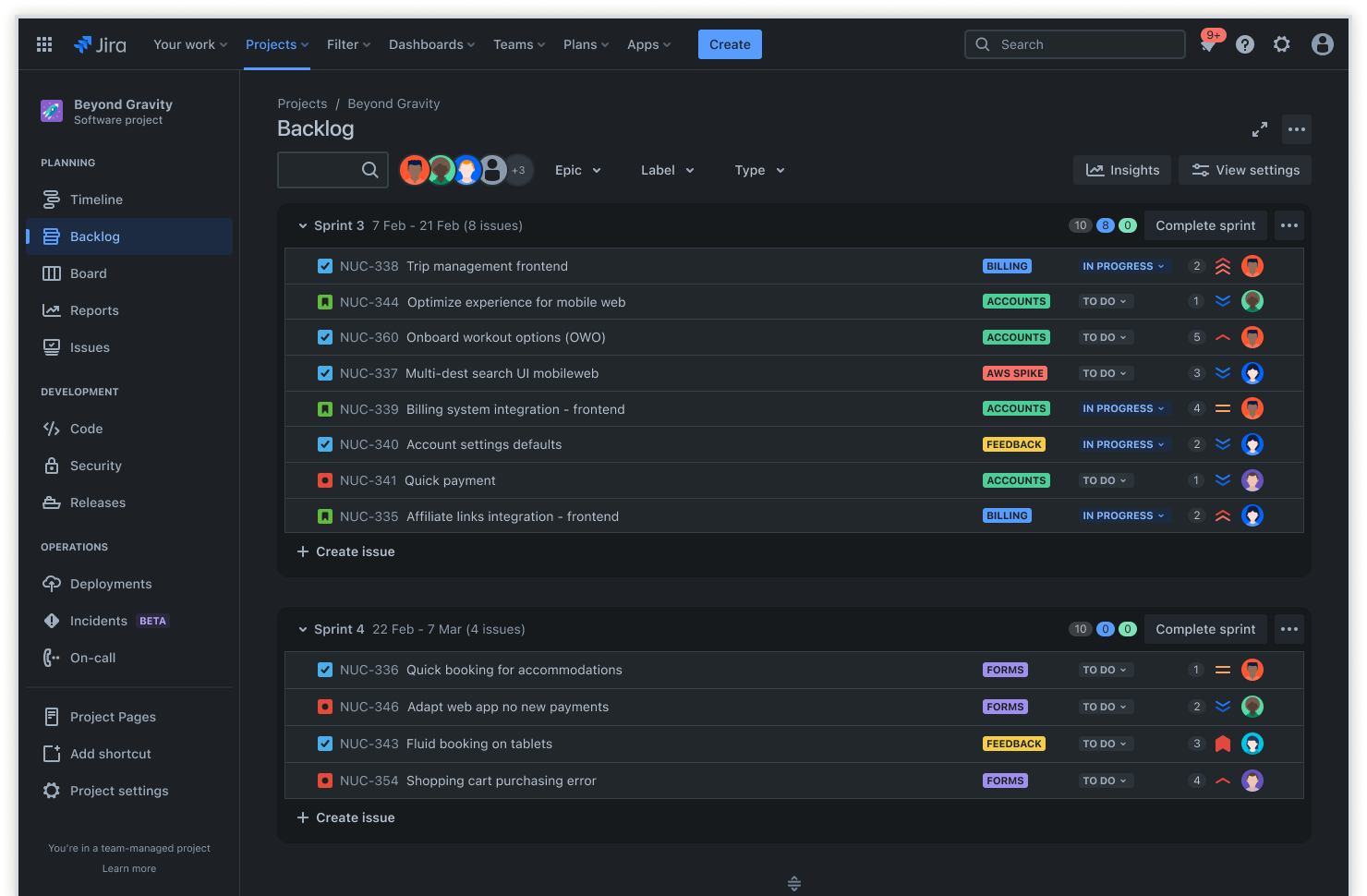
Project management software like Jira makes it easier to implement and scale adaptive practices. Built-in features for sprint planning, backlog management, and progress tracking give teams the structure they need to work iteratively.
Automation capabilities handle repetitive tasks, while reporting tools provide the transparency that keeps stakeholders informed and engaged. When teams can see real-time progress and easily adjust priorities, adaptability becomes part of how they naturally work rather than an extra burden.
Frequently Asked Questions
What are the benefits of implementing adaptive project management?
Adaptive project management delivers several key advantages that affect both day-to-day operations and broader business outcomes.
Continuous feedback loops keep teams aligned with stakeholder needs
Faster value delivery becomes possible through incremental releases throughout the project
Early issue detection prevents costly late-stage problems
Stakeholder satisfaction increased from regular involvement and influence
When teams can deliver value faster, adapt to change, and catch problems early, organizations become more innovative and efficient while gaining an edge in competitive markets.
What are best practices to successfully implement adaptive project management?
Getting adaptive project management to work well means setting your team up for success at the beginning of the process. Follow these best practices:
Set up a pilot project to test the approach with a single team before scaling.
Train team members on adaptive principles and practices, not just tool mechanics.
Use Jira for iterative planning, backlog management, automation, reporting, and standardized processes that scale adaptive practices across teams.
Build a feedback culture where people feel comfortable sharing ideas and discussing what’s working.
What is an example of adaptive project management?
Here’s a concrete example of adaptive project management in action:
A software development team building a new customer portal starts with a basic login and dashboard, then releases it to a small group of users. After gathering feedback, they plan the next sprint based on what they learned.
The team discovers users want mobile access more than the advanced reporting they originally planned, so they shift priorities for the next iteration. This example shows how adaptive methods let teams respond to real user needs instead of following a fixed plan.
What are some challenges of adaptive project management?
Adaptive project management comes with some hurdles, but most can be overcome with the right strategies.
Uncertainty: Some stakeholders struggle with uncertainty, though regular communication and early wins help build comfort.
Estimation: Teams may find estimation difficult early on, but tracking velocity across sprints improves accuracy.
Coordinating dependencies: Coordinating dependencies between multiple teams requires careful planning, but tools like Jira provide shared visibility.
Rigid approval processes: Organizations with rigid approval processes may need to adjust governance for faster decision-making.
Recommended for you
Ready-made Jira templates
Browse our library of custom Jira templates for various teams, departments, and workflows.
A comprehensive introduction to Jira
Use this step-by-step guide to discover essential features and the best practices to maximize your productivity.
Understanding the Basics of Git
From beginners to advanced experts, use this guide to Git to learn the basics with helpful tutorials and tips.