How to unlock seamless collaboration for successful product launches with the Teamwork Collection
You’ve made it to the final milestone of your product roadmap — your new product is in market and the campaign has launched! Unfortunately, the results are not hitting the mark or the goals that you and your team were planning to achieve. Customers are confused about the product benefits. Adoption is lagging behind expectations. And the internal team isn’t equipped to answer the flood of customer support questions.
Product and feature launches frequently face challenges when product and marketing teams operate in silos and fail to collaborate effectively. While siloed efforts are a known issue, the results of these siloes are the larger issue.
High-performing teams know that tight collaboration isn’t merely optional. It’s the difference between a disconnected rollout and a successful launch that resonates with your customers.
So how do those high performers do it? This guide walks through the tools and tactics they use within Confluence, Jira, and Loom to stay aligned, build momentum, and bring one unified product story to market.
What you’ll take away from this guide:
- A tactical collaboration framework from planning to post-launch
- Real-world strategies used by successful teams
- Concrete steps for using Atlassian apps to make it happen
From silos to synergy: Why clear collaboration matters
Why does every team need to work together to execute a product launch? Think of NASA whenever a new rocket leaves Earth: base command will ensure every team is “go” before ordering the ignition. Engines don’t fire until each team is in alignment with mission command.
(Fun fact: it’s not just a metaphor. NASA really does use Confluence & Jira to stay on the same page).
It’s the same for your product launch. Working together as one team ensures everything about your new product feels “go for launch.” No one wants to be on the hook to let the boss know that we have a problem.
So to prevent communication breakdowns and issues on the day of launch, start with these core approaches for planning goals, people, and expectations:
- Develop a shared product strategy: Gives everyone a source of truth for product messaging and more effective GTM (go-to-market) execution.
- Clear roles and aligned planning: When everyone knows their role within the overall strategy, faster, more confident decisions arise.
- Internal alignment: When every team understands the intricacies of the product, customers will know, too. This creates better external adoption and customer understanding.
“It’s easy for teams to get lost in execution and forget whether they’re solving the same problems. That’s why clarity on goals, shared audience insights, and a common language is foundational to successful collaboration.” - Andrew Stillman, Head of Product Marketing for Teamwork Collection, Atlassian
That all sounds beneficial, and it is. But keep in mind that a successful product launch is also about avoiding mistakes that can be forecasted and planned to prevent:
- Launch delays thanks to unclear or misaligned plans and a lack of communication
- Conflicting narratives or disjointed messaging across channels, leading to less customer understanding about why your product is helpful.
- Time wasted, especially when hunting for documents or doing duplicate work that could have been avoided.
- Lost insights and missed market opportunities because siloed efforts create blind spots within your team.

3. Establish roles and responsibilities (while encouraging a culture of support)
Who’s doing what? It’s a simple question with major project implications. Our recommendation is to get PMs and PMMs on the same page with these two roles:
- PMs: Own the “what” and “how” of the product. They’re responsible for what the team is building and ensuring it meets customer needs. They also serve as the voice of their engineering and design partners, bringing product decisions back to the technical team with clarity and context.
- PMMs: Own the “what” and “how” of the narrative. They’re responsible for how the product will be positioned in the market. PMMs often act as the general managers of the go-to-market strategy, aligning with social, paid, web, content, PR, and enablement teams to ensure the message gets into the right hands.
That’s the high-level overview. But here’s where the real magic happens: alignment between PM and PMM ensures that the right narrative trickles down to every other function. When those two roles are in sync, engineering, design, and marketing functions can all move in the same direction, without confusion or mixed signals.
Encourage overlap in the planning process. PMMs should understand the product roadmap and any technical tradeoffs that might affect the story. PMs should be thinking about customer value, positioning, and how their decisions shape the narrative.
“The best product marketers act like general managers of the go-to-market strategy. It’s not just about messaging – it’s owning the entire customer journey across all channels.” - Jefferson Taylor, Head of Product - Confluence, Atlassian

4. Plan product launches with flexibility and foresight
Even the most well-orchestrated launch schedule will evolve over time. A good product launch team needs both structure and adaptability to successfully go live.
If it seems like a difficult balance to strike, here’s how we’ve noticed the top performers do it:
- Building launch calendars with tie-ins to real events, like industry conferences or fiscal quarters. This gives you hard deadlines while encouraging buy-in from every team.
- Assigning dedicated leads from both teams, which encourages the cross-functional collaboration we’re talking about.
- Using templates for different launch tiers, or creating tier-based “playbooks” within Confluence so you can learn what works, what doesn’t work, and repeat your best habits.
You can’t plan for everything, though, and misalignment can easily sneak in to derail a project of this scale. So as much as you prepare, you may face a few of these common problems during your product launch project.
To hopefully save you and your team from frustration, here are some common problems and quick solutions to know about in hopes of mitigating them:
→ Misalignment on scope or goals in relation to the outcome. If you can’t agree on how the story should end, you’re probably not going to agree on the chapters that come before it.
Solution: Schedule a proper kick-off meeting with the stakeholders to discuss goals, align on objectives, and set up the proper rituals.
→ Siloed brainstorming happens without structure or follow-up. When you brainstorm, it’s easy to get enthusiastic about an idea. But if the brainstorming session itself is siloed and the team doesn’t share these ideas for approval before moving into execution, you’ll run into some major issues.
Solution: Host a cross-functional working session or brainstorm meeting to open up discussions and allow for creative freedom to share ideas. Make sure to communicate and share context with the proper stakeholders and attendees so they are aware of the purpose of the meeting and can come prepared to share their ideas.
→ Scattered documents and tools. It’s difficult to keep teams aligned when key information is scattered across different tools and places. When one-off documents are shared in Slack, or conversations happen in siloes, it makes it easy for teams to miss important updates or key decisions that lead to more misalignment down the line.
Solution: Having the right tools to collaborate and processes in place can help everyone communicate updates and collaborate effectively — more on this in a moment.
→ Unclear ownership and decision rights. A product launch works best when a project manager can make key decisions. Everyone should have input, but ultimately, one person needs to keep everything on schedule.
Solution: Defining clear roles and responsibilities and identifying decision-makers. PMs and PMMs should set expectations and clarify on their roles to stay in sync.
Challenge: Scattered documents and tools make it difficult to find what I’m looking for
Product launches typically involve a large cross-functional team, and it’s important to align everyone on goals, priorities, timelines, and decisions. But with so many different cooks in the kitchen, it’s difficult to keep track of all of the updates and information teams need to get their tasks done. It leads to “can you send me that doc, again” pings or worse — teams working in the dark that lead to misalignment down the line.
Solution: Confluence makes finding key docs and answers a breeze so you always have the most up-to-date and accurate information you need to keep work rolling along.
Create a central launch hub in Confluence to centralize everything from the top-level strategic information like launch goals and project details, down to the nitty gritty details like launch email copy or design handoffs. Keeping everything together ensures that when someone on the team needs something, they know where to look to find what they’re looking for.
You can even add in external links, like Figma screens, slides in Google, project boards in Jira, or dashboards from your data tools, to keep all related launch materials together for easy discovery and access.

⭐️ Pro tip: With Rovo, Atlassian’s AI-powered solution, it takes knowledge discovery to a whole new level. Rovo brings together all of your tooling and data connections — like Slack chats, meeting recordings, Confluence pages, Jira projects, and more — so it always has full context of your work.
Ask it things like what’s the latest update on this launch?”, or “what did I miss from last week’s standup?” and it’ll pull from all relevant sources to provide the most relevant and up-to-date answers, without you having to go digging for that information.
Challenge: We’re missing deadlines because of dependencies and unclear task ownership
One of the biggest blockers to a smooth launch is confusion: who’s doing what, and when, especially across a large cross-functional team, tasks and deadlines get lost easily.
Solution: Jira makes project management a breeze. Break down complex launches into actionable steps and assign clear owners and deadlines to keep the whole cross-functional team aligned. You can manage work your way with lists, boards, and timeline view so you can always stay on top of progress.
Rovo is with you every step of the process too. Let AI help you create work items from anywhere, like directly from Slack or your Confluence pages, break down work into easily manageable tasks, and link related resources to individual tasks so stakeholders always have the context they need.
With Rovo in Jira, product launches practically manage themselves so you can focus on getting things done instead of all of the work around work.

You can also embed Jira boards directly into Confluence pages, you get the best of both worlds: real-time task tracking with visibility across the entire launch. Confluence becomes the go-to space for project updates, strategy docs, assets, and the overall launch status, without requiring everyone to live inside Jira.
⭐️ Pro tip: For long-term planning, teams using Atlassian Goals can connect high-level launch objectives to Jira projects and Confluence updates, keeping every detail tied to the bigger picture.
Challenge: I don’t want to schedule yet another meeting, but I don’t know how else to communicate these updates with the team
Solution: Share it in a Loom. Oftentimes, there are moments that a project update, question, request, or change needs to be communicated but it requires more than a message over Slack, Teams, or an email. It can also be difficult to coordinate everyone’s schedules to get a live meeting on calendars.
Instead of coordinating schedules and requesting everyone’s time for a live discussion, you can share these updates in a Loom video. Set a due date for when everyone needs to watch it and respond to the information in the video. This approach saves everyone time and offers a solution for anyone who can’t attend a live discussion but needs to be part of the decision-making on the project. It also serves as a project artifact to track the changes and progress of the project.
A Loom video can then be posted directly to a Confluence page to share that update and provide that feedback to the client.
These scenarios are your signal that you or a member of your team can use Loom instead of adding another meeting to everyone’s calendar:
- You will do a majority of the speaking during the meeting and primarily need to share status updates or decisions that have already been made that everyone needs to be informed on.
- Your message in Slack or comment in Confluence will be a wall of text and take a long time to write.
- You will be talking through a concept or walking through a lot of visuals, and you want this to be accessible later for other stakeholders.
For those times that you do need to schedule a meeting, let Loom’s AI-powered notes do all of the note-taking for you. Connect Loom to your Zoom, Google Meet, or Teams meetings and get AI-powered notes in Confluence automatically. With the Meeting Insights Reporter Rovo agent, you can even catch up on notes and insights from missed meetings!

⭐️ Pro tip: Catch up on missed discussions, key decisions, and action items from meeting you couldn’t attend with the Meeting Insights Reporter Rovo agent.
Challenge: There’s too much “work” around work.
For every productive outcome, like drafting the launch email, or conducting user interviews, there’s work tasks around it that don’t directly help with output but still require your time—think things like reading up on project backgrounds, creating and updating tasks, catching up on comments, or chasing down the right information.
Solutions: Cut down on busywork with Rovo, Atlassian’s AI solution. Rovo is integrated into all of the Teamwork Collection apps and can teams work faster and smarter in a number of different ways. It can:
- Summarize page content and comments so you can get the TL;DR quickly
- Improve quality of work with one-click improvements to your writing and Jira work descriptions
- Search across your entire tool-stack to give you accurate, relevant answers in seconds
- Give you definitions to unique company acronyms and internal jargon
- Create tasks directly from places like Slack and Confluence pages to save you time
- and more!
Rovo also offers out-of-the-box agents built specifically with common but specialized tasks, like creating diagrams, brainstorming ideas, drafting content with the company’s brand voice, summarizing customer insights, and more.

The future of collaboration is connected
When product and marketing teams have the right tools for seamless collaboration, everything runs more smoothly. Teams being on the same page ensures clearer messaging, ultimately helping you deliver more customer value.
And when your tools match your workflow, that’s when the magic really happens.
With the Atlassian Teamwork Collection, you can unlock the following benefits:
- Work from a collaborative space that serves as a single source of truth for your product launch documents in Confluence
- Keep track of every moving piece and priority by using Jira as the project management tool for product launches
- Collaborate asynchronously and make team communication more efficient across time & space with Loom
- Allow your team to focus on the high-impact work and use Rovo to help your team work faster, smarter, and together with AI.
So what comes next? Think of this article as your latest project – we’ve got a checklist with some milestones you can hit:
- Share this guide with your launch team
- Create a dedicated Confluence Space for your next product release
- Set up your Jira product launch project board.
- Build your rituals, such as weekly syncs, shared pages, and Loom updates
- Lean into AI to move faster
Save your templates to turn your best practices and most successful launches into repeatable playbooks.
With the right tools, a launch shouldn’t feel like a scramble. The right tools create a natural alignment, which ensures a successful, collaborative launch.
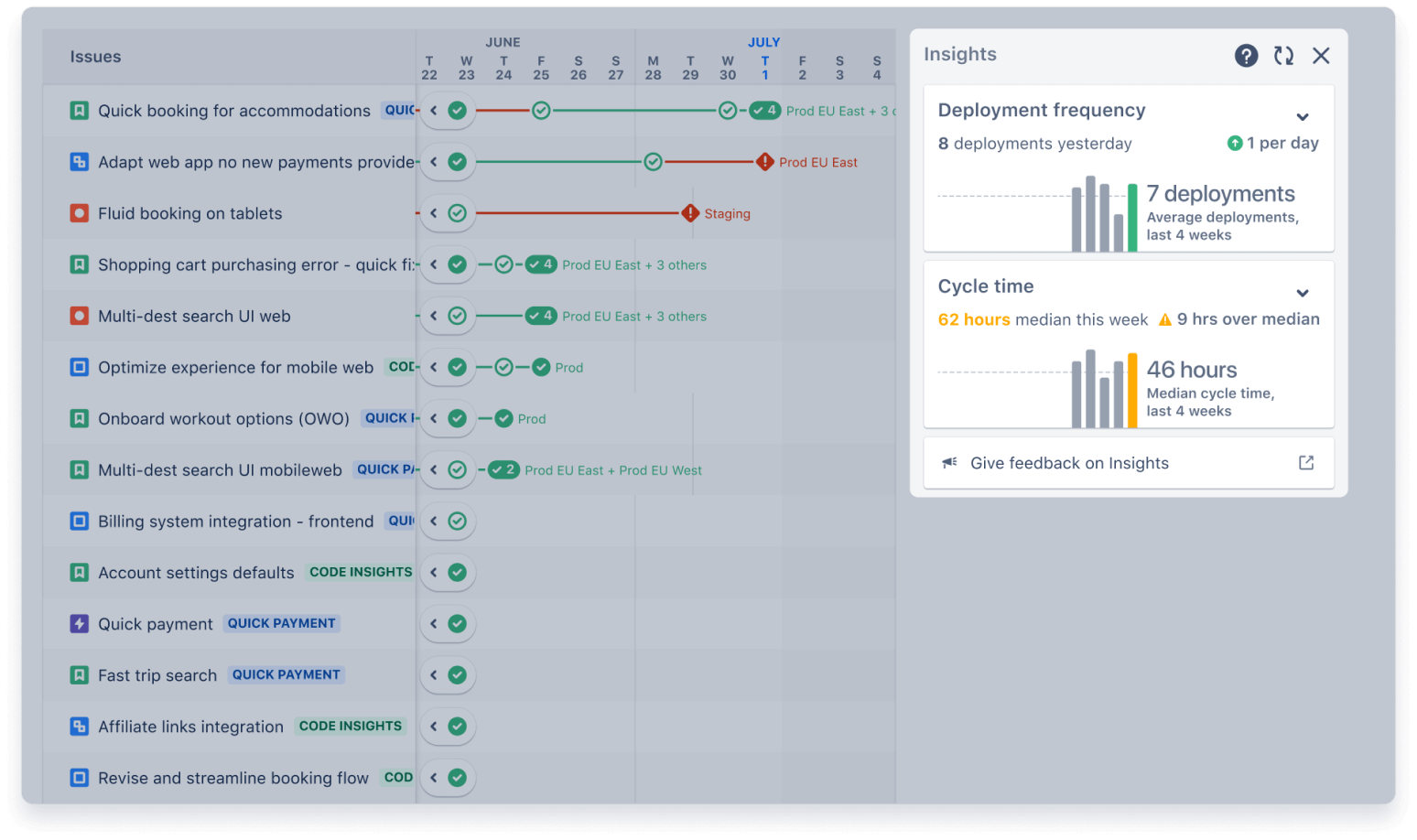
Insights
In Jira Software, insights helps the team make data-driven decisions without leaving their current context. Insights source data from your Jira boards and projects to present aggregated views of your team’s historical progress. Insights are currently available for scrum metrics in both company-managed and team-managed projects.
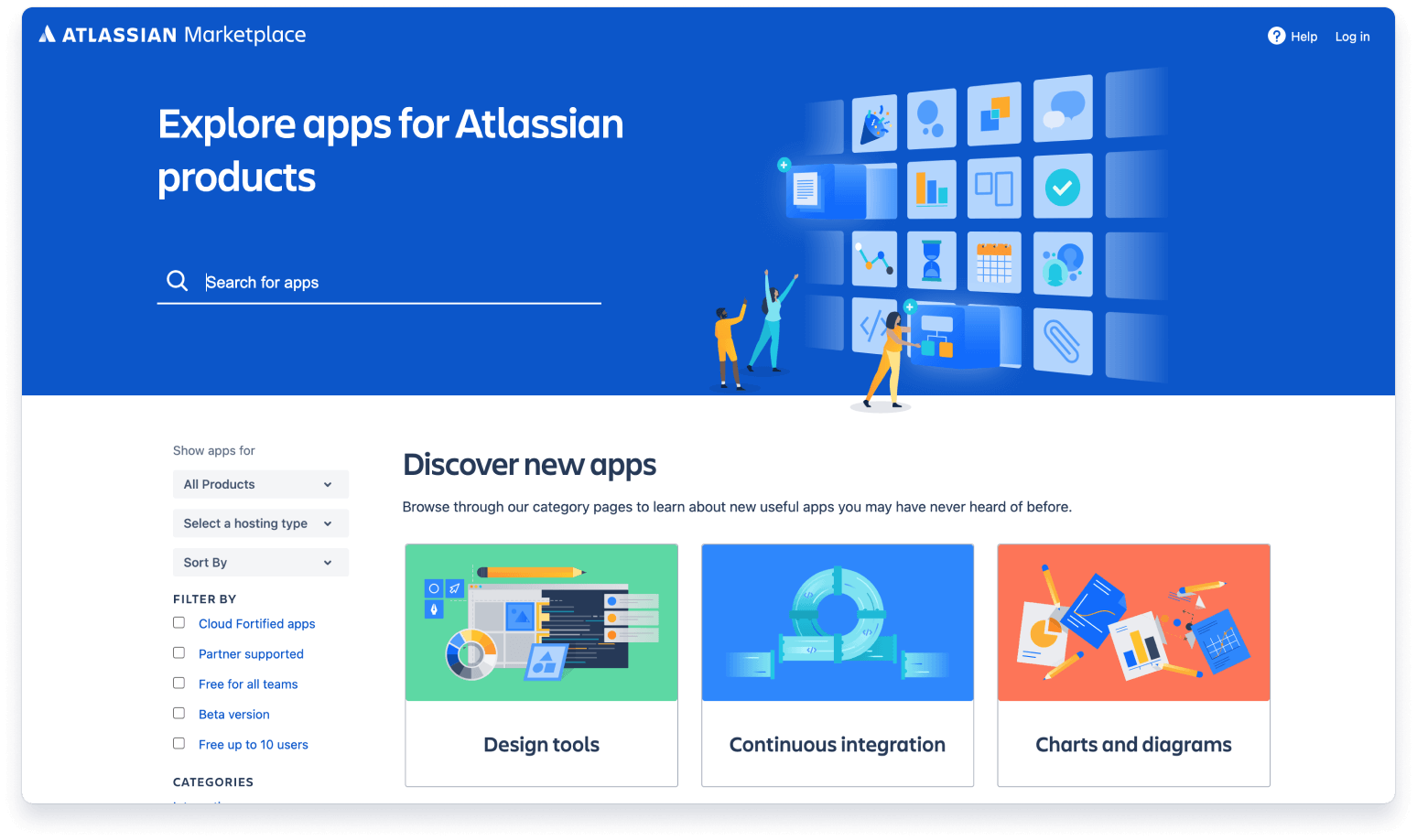
Integrations
In Jira Software, an app (sometimes called an add-on or plugin) is an installable component that supplements or enhances the functionality of your instance. You and your teams can spend less time managing work and more time building great software with over 3,000 Jira Software apps that can be custom-tailored to fit any and every use case.