Project post-mortem template
Created by:

Capture lessons learned, improve processes, and drive team growth with a clear project review process
Categories
- Project Management
- Marketing & Sales
- Product Management
- Whiteboard Template
KEY FEATURES
Feedback
Documentation
Reporting
A successful project doesn’t end when the final deliverable is handed over. It’s important to reflect on how well the project progressed and whether lessons can be learned. A structured review process turns this reflection into a valuable tool delivering practical insights you can apply to future work.
A consistent framework for each review keeps the discussion focused and supported by standardized documentation. This makes it easy to compare learnings across projects and identify recurring patterns that need attention.
Use a post-mortem template as part of your whiteboarding strategy to maintain such a framework, helping your teams avoid repeated mistakes and replicate proven strategies.
What is a project post-mortem?
A project post‑mortem is a structured, reflective meeting convened immediately after a project concludes. It brings together all key participants (project leaders, team members, and relevant stakeholders) to conduct a retrospective analysis of the project.
The primary aims are to:
Celebrate successes
Uncover what didn’t work
Identify improvement paths
Teams can accomplish this by first acknowledging what went well and recognizing team achievements. They’ll then explore any shortcomings or missed opportunities. This is not a time for assigning blame, because participants should feel free to give honest feedback. Focus instead on understanding the root causes.
Finally, assess all meeting reflections and brainstorm ideas for best practices to ensure that future projects run optimally. Consider whether these actionable insights may also be applicable to general organizational processes and standards.
What is a project post-mortem template?
A project post‑mortem template is a standardized framework that guides and streamlines the post‑mortem process. It ensures consistency, clarity, and efficiency across project debriefings.
It does this by outlining the project's core milestones in predefined categories, such as the project overview, successes, and failures. It concludes with fields for assigning responsibilities, setting deadlines, or prioritizing actions.
Why use a post-mortem template for projects?
A post‑mortem template offers teams a dependable, repeatable structure for capturing insights from completed projects. Rather than relying on memory or ad hoc reflection, it ensures that all lessons, both positive and negative, are recorded consistently.
This approach promotes meaningful reflection, so processes evolve in a considered and thoughtful manner. By walking participants through key prompts and action steps, the template helps transform observations into concrete, organized plans for future improvement.
Over time, teams refine and customize these templates, aligning them with evolving workflows and strategic goals.
Who uses project post-mortem templates?
Post‑mortem templates are commonly used by the project manager and team leads. But their utility goes much further, extending to cross-functional teams that may include developers, QA engineers, marketing professionals, IT administrators, and operations leaders.
Whether used for software rollouts, marketing campaigns, process redesigns, or incident reviews, organizations across all industries rely on these templates to preserve and prioritize actionable input from every stakeholder.
When to use a project post-mortem template
The ideal moment to convene a post‑mortem—and work through the template—is shortly after project completion, typically within a few days to one week. At this point, events and decisions are still fresh, yet emotions have had time to settle. This ensures that the discussion remains on point, without wasting time on trivial issues.
A helpful strategy is to schedule mini post‑mortems after major milestones or sprints, especially in longer or Agile-driven projects. This allows for timely course correction and continuous learning.
What should a project post-mortem template include?
The exact agenda of the post-mortem depends on your project objectives.
The template needs sufficient flexibility to scale from lightweight sprint retrospectives to in-depth reviews for large, high-impact projects. Whatever the case, each prompt should be clear and relevant to the participants.
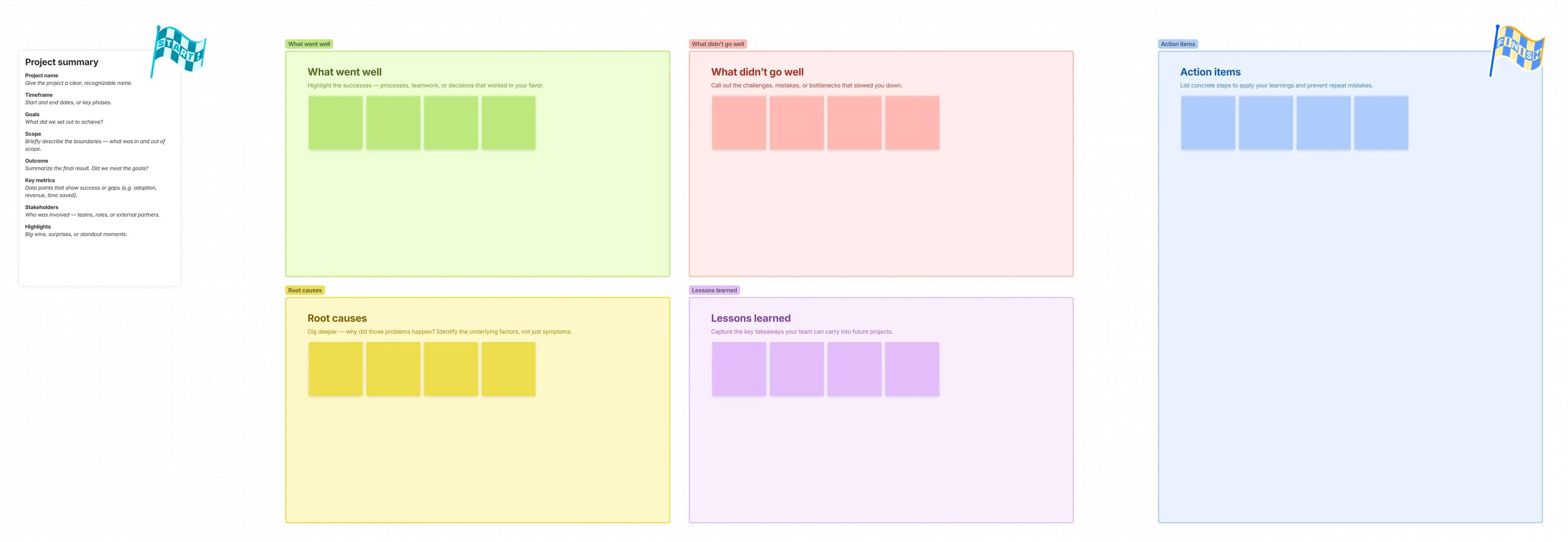
The core sections to include in a post-mortem project template are:
Project goals and scope: Briefly restate the project’s objectives, deliverables, and success criteria to set the context for evaluation.
What went well: Highlight successful outcomes, effective processes, or noteworthy contributions worth repeating in future projects. Discuss what led to these successes.
What didn’t go well: Identify challenges, obstacles, or missed opportunities that hindered progress or results. Brainstorm the reasons behind these issues.
Action items: Define concrete steps to address identified issues or build on strengths.
Owner assignments: Assign individuals responsible for completing each action item and specify deadlines.
The idea behind the post-mortem may be to tailor a report for specific stakeholders, such as executives, technical teams, or external clients. Alternatively, you may find yourself reviewing projects of varying scope, complexity, or industry focus.
There are circumstances in which you might consider adding optional sections to the template, such as:
Key data points: Metrics like budget vs. actual spend, delivery timelines, quality scores, or customer satisfaction ratings.
Timeline overview: A visual or written summary of major milestones, phases, and delivery dates to identify pacing patterns.
Stakeholder feedback: Insights from clients, sponsors, or end users to provide an external perspective on project performance.
Root cause analysis: A structured breakdown of why specific issues occurred, helping teams target systemic rather than surface-level fixes.
Benefits of using a project post-mortem template
The structured nature of a template is inherently beneficial. But let’s look in detail at how this delivers value across the different stages of a project review.
Streamlines the review process
A post-mortem template acts as a roadmap for the meeting, guiding participants through the topics to discuss. There is no uncertainty about how to proceed, no points that are overlooked, and little chance of going off on a tangent.
Encourages consistent documentation
When every post-mortem follows the same format, the resulting documentation becomes uniform and easy to reference. Comparable records help teams identify patterns across projects, making it simple to revisit past findings during planning sessions. Over time, this consistency builds a valuable knowledge base that supports better forecasting and decision-making.
Promotes accountability
The template reinforces a sense of responsibility by explicitly assigning ownership for achievements and follow-up actions. Team members can see exactly who is tasked with implementing improvements or maintaining successful practices. There’s no duplication of effort, and the emphasis on constructive communication means everyone contributes to positive change.
Uncovers process hurdles
Careful reflection of the timeline often reveals recurring roadblocks or inefficiencies that might otherwise go unnoticed. Whether it’s outdated tools, bottlenecks in approval processes, or unclear role definitions, these insights highlight opportunities to refine workflows. Addressing these issues leads to more predictable delivery timelines and improved project collaboration.
Fosters team learning
A well-run post-mortem serves as a shared repository of knowledge that helps teams grow together, encouraging cross-disciplinary learning and skill development. Over time, this practice builds a culture that values reflection, transparency, and continuous improvement, all key traits of high-performing teams.
How to use the project post-mortem template
- 1
Schedule a dedicated session
Plan the post-mortem meeting as soon as possible after the project closes, ideally within a week, so details remain fresh in everyone’s minds. Select a time that accommodates all participants, factoring in time zones and work schedules to maximize attendance.
- 2
Invite all key contributors
Bring together voices from every function involved in the project. This could include project managers, developers, designers, operations staff, marketers, and client-facing roles. Encouraging participation from varied perspectives helps create a well-rounded view of what worked and what didn’t. It also fosters a culture where all feedback is welcomed and respected.
- 3
Recap the project’s objectives
Begin the session by restating the project’s original goals, timelines, and key performance indicators. This provides a benchmark for evaluating results in a way that’s relatable to everyone. Participants can more clearly identify whether targets were met, exceeded, or missed—and explore the reasons why.
- 4
Highlight wins and successful strategies
Discuss processes, tools, and team dynamics that supported positive outcomes, and identify the factors that made them effective. Publicly acknowledging these wins boosts morale and gives stakeholders an incentive to embed proven strategies into future work.
- 5
Discuss challenges and missed opportunities
Shift the focus to areas where expectations weren’t met and why. Keep the conversation solutions-oriented, avoiding personal blame and instead focusing on systemic improvements that will prevent similar issues in the future.
- 6
Agree on action items and next steps
Close the meeting by defining clear, actionable steps to address the insights gathered. Assign each action item to a specific owner, along with deadlines and success criteria. This ensures that the post-mortem promotes change, rather than remaining an isolated discussion. Documenting these commitments in the template creates a record for accountability and follow-up.
Use the project post-mortem template in Confluence
With the Confluence project post-mortem template, you’re not starting from a blank page. You have a pre-structured format to jump-start your post-mortem, allowing you to spend less time structuring the document and more time on meaningful reflection.
Confluence makes real-time collaboration effortless. Team members can contribute directly to the page from anywhere, add comments alongside specific points, and co-edit without version-control headaches. With Confluence online whiteboards, you can visually map ideas, organize feedback, and prioritize next steps. You can even embed the post-mortem board directly in your report for context.
Integrations with Jira mean you can link action items to tracked tasks instantly, keeping follow-up work connected to the original discussion. You can also @mention stakeholders to draw their attention to key findings, and use page history to track how recommendations evolve.
By centralizing your post-mortem in Confluence, you create a living, searchable knowledge base that future project teams can learn from—turning reflection into a lasting asset.
Explore more templates to supercharge teamwork
Empower everyone, on every team. Build, connect, and deliver your biggest ideas seamlessly across Atlassian apps using our complete collection of ready-made workflows.