
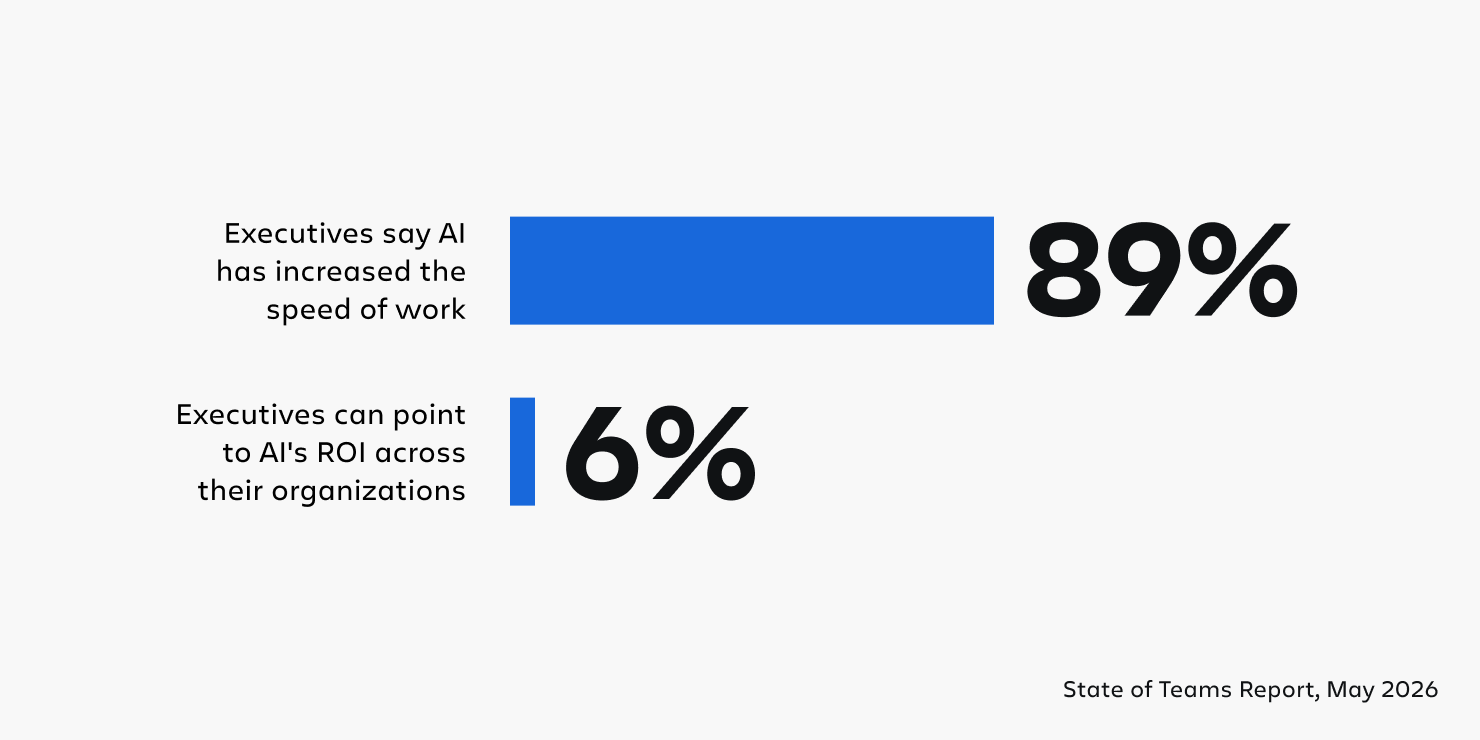
89% of executives say AI has increased speed. Only 6% can point to org-wide ROI. IDC’s Wayne Kurtzman and Atlassian’s Liz Fosslien unpack what’s missing – and where CIOs should start.
Everyone on your team is faster. So why isn’t your organization moving further?
That’s the provocation at the center of a recent fireside chat between guest speaker IDC Research Vice President Wayne Kurtzman and Atlassian’s Liz Fosslien, a best-selling author in high-performing teams. The two unpack what Atlassian’s State of Teams 2026 research calls the “fragmentation tax”: the hidden cost of disconnected tools and siloed knowledge that slows organizations even as individuals speed up. IDC’s work with CIOs reveals where the real AI opportunity lies in addressing it.
Spoiler alert: It’s AI orchestration.
👉 Watch the full webinar on-demand
Why is AI making individuals faster but not organizations?
AI has delivered on its promise of velocity. According to the State of Teams 2026 report, 89% of executives say AI has increased the speed of work. But only 6% are sure they can point to clear examples of AI’s ROI across their organizations.
As Fosslien frames it: “If everyone’s AI-efficient, in that they personally are able to produce 10x the content, you’d expect 10x momentum across the company. But what’s happening instead is that teams are often getting 10x the chaos.”
The numbers tell a story of acceleration without alignment. The State of Teams research found that while 73% of executives measure AI success through productivity and 59% through efficiency, only 48% say AI has actually improved collaboration. The engine is revving, but the wheels aren’t turning together.
“We’re running AI together, separately”
The disconnect is clear: organizations are adopting AI rapidly, but they’re doing it in silos. As Kurtzman puts it: “Organizations are running on AI, together, separately; not AI together. At least not yet.”
What he’s seeing in his work with CIOs across the Global 1000 – the top 1,000 most valued companies worldwide – is a clear divide: “We’re seeing two types of companies: one that views people as assets, and one that views people as assets to be developed. One has collaborative tools and often unhelpful corporate training; the other has a culture of collaboration with a well-integrated tool stack. And the difference is night and day.”
That second group? They’re already thinking about AI orchestration. And they’re the ones closest to unlocking new revenue streams.
What are the biggest barriers to AI orchestration for CIOs?
So what’s standing between most organizations and effective AI orchestration?
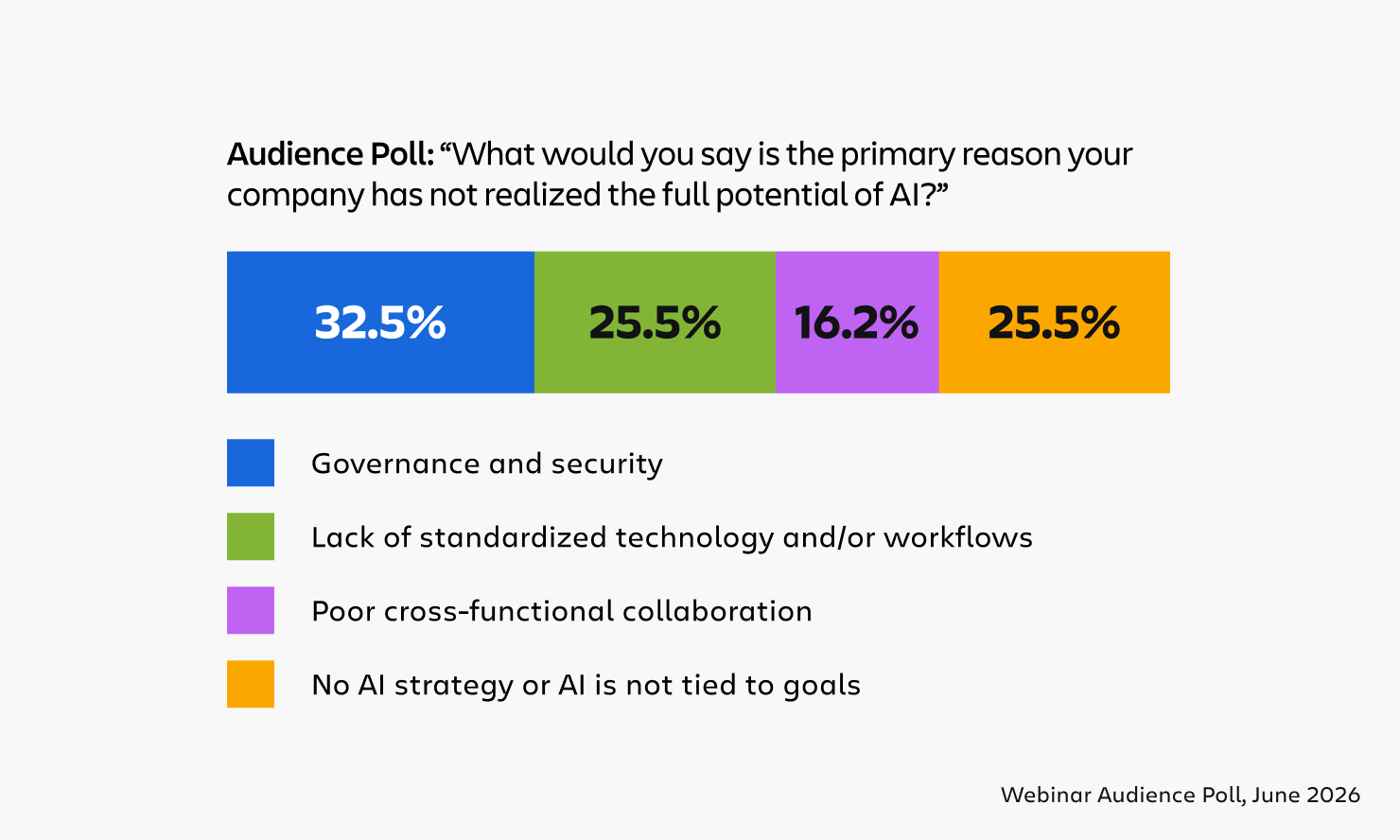
It starts with the foundation. AI orchestration requires a standardized system for scalable, secure, and interoperable deployments that meets security, governance, compliance, privacy, and data residency standards.
The stakes are high. IDC forecasts that by the end of 2027, 60% of Global 1000 companies will use AI to create new business metrics from collaboration, integrated apps, and behaviors, linking them to outcomes unmeasurable just two years ago. Those left behind will lack these capabilities entirely. (IDC FutureScape: Worldwide Future of Work 2026 Predictions)
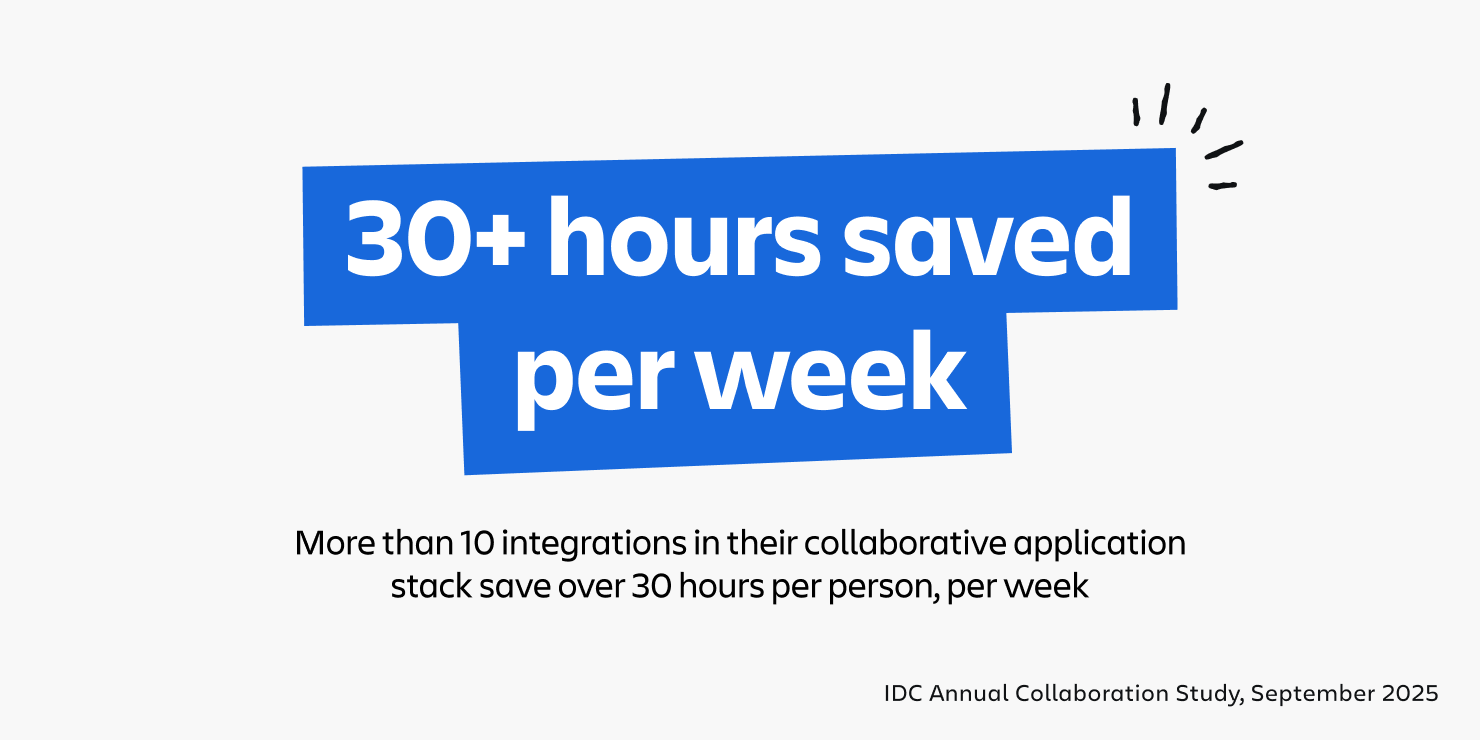
Research Kurtzman shares from IDC states that companies with more than 10 integrations in their collaborative application stack save over 30 hours per person, per week. The sweet spot for significant time savings? 7 to 15 integrations. And that’s before AI enters the picture. (IDC Annual Collaboration Study 2025: North America and Western Europe)
Additionally, Kurtzman notes that CIOs are increasingly partnering with CHROs to build cohesive change cultures. “AI is a team sport in the same way collaboration is a team sport. Everyone needs to be empowered, and capable of learning new things and applying them.”
The State of Teams data supports this. Right now, only 24% of AI implementations focus on teams, while knowledge workers spend 80% of their time on collaborative work. That means the biggest AI opportunity is hiding in plain sight.
The trust problem beneath it all
Distrust in AI outputs isn’t a fringe concern; it’s becoming a shared consensus across teams trying to separate useful intelligence from confident noise. Kurtzman adds, “If you point a large language model at nothing, or at very shallow data, you mostly get noise. It’s garbage in, garbage out.”
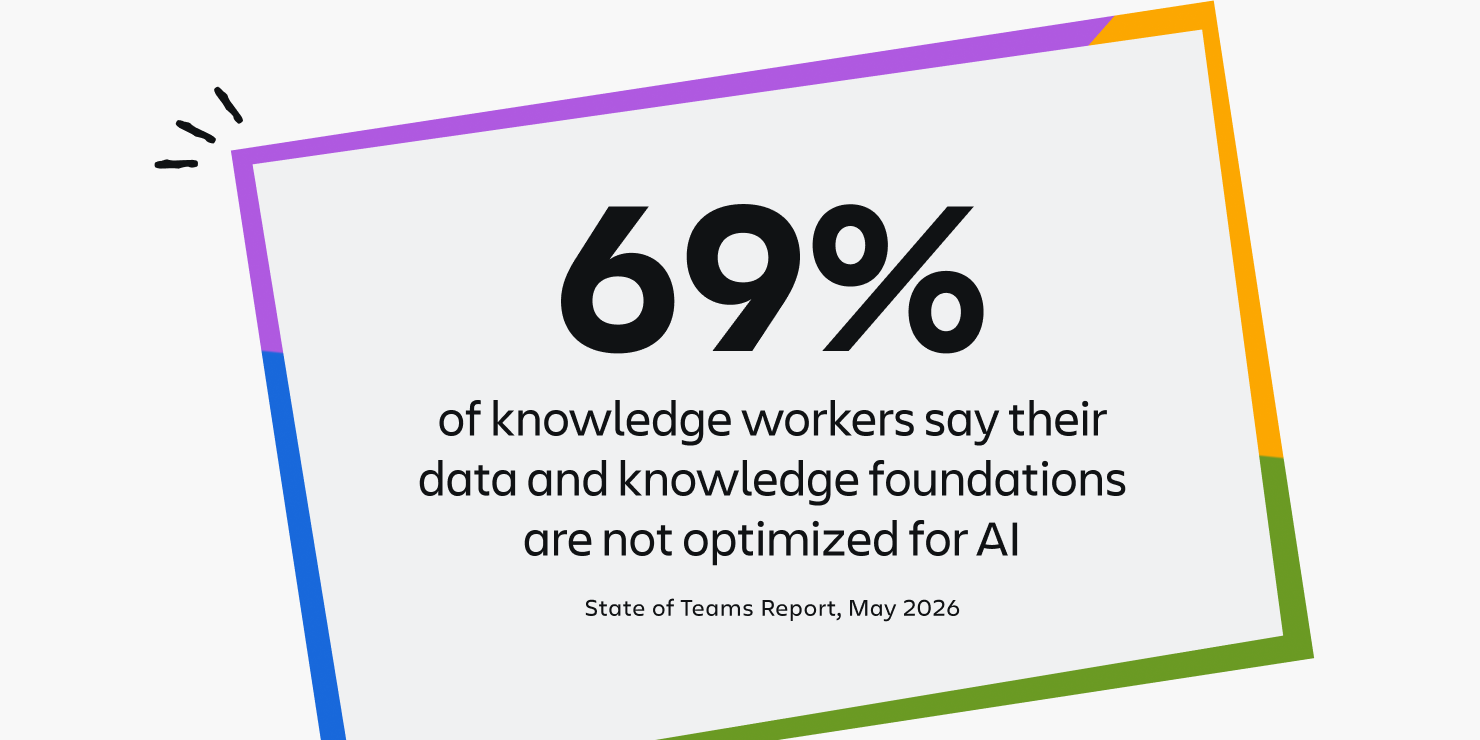
The State of Teams research quantifies this trust gap: only 22% of knowledge workers fully trust AI’s accuracy, and 69% say their data and knowledge foundations are not optimized for AI.
Just like people need the right context to do their jobs well, AI needs the same foundation to produce work you can trust. Without it, teams are more likely to get hallucinations, incomplete answers, or inaccurate information dressed up with confidence. “Where we see the value is when the AI has real context to work with: the history of decisions, the goals you are driving toward, the project outlines, and the teams actually building for the company, all in a place the AI can safely access. Once you have that, the quality of the intelligence gets much higher,” says Kurtzman.
The play imperative (yes, really)
Perhaps the most unexpected insight from the conversation is Kurtzman’s emphasis on play. He shares IDC research showing that nearly 80% of collaborative workers say they need play time to learn AI and other new technologies.
“You have a whole different mindset when you play,” he explains. “When you work, you’re task-focused. When you play, you allow yourself to be wrong, to learn.”
But the reality on the ground is stark. As Fosslien notes, citing the State of Teams research: 87% of knowledge workers say that with everyone in execution mode, they often lack the time or capacity to coordinate, let alone experiment. And 45% of knowledge workers think their leaders view AI as a magic switch.
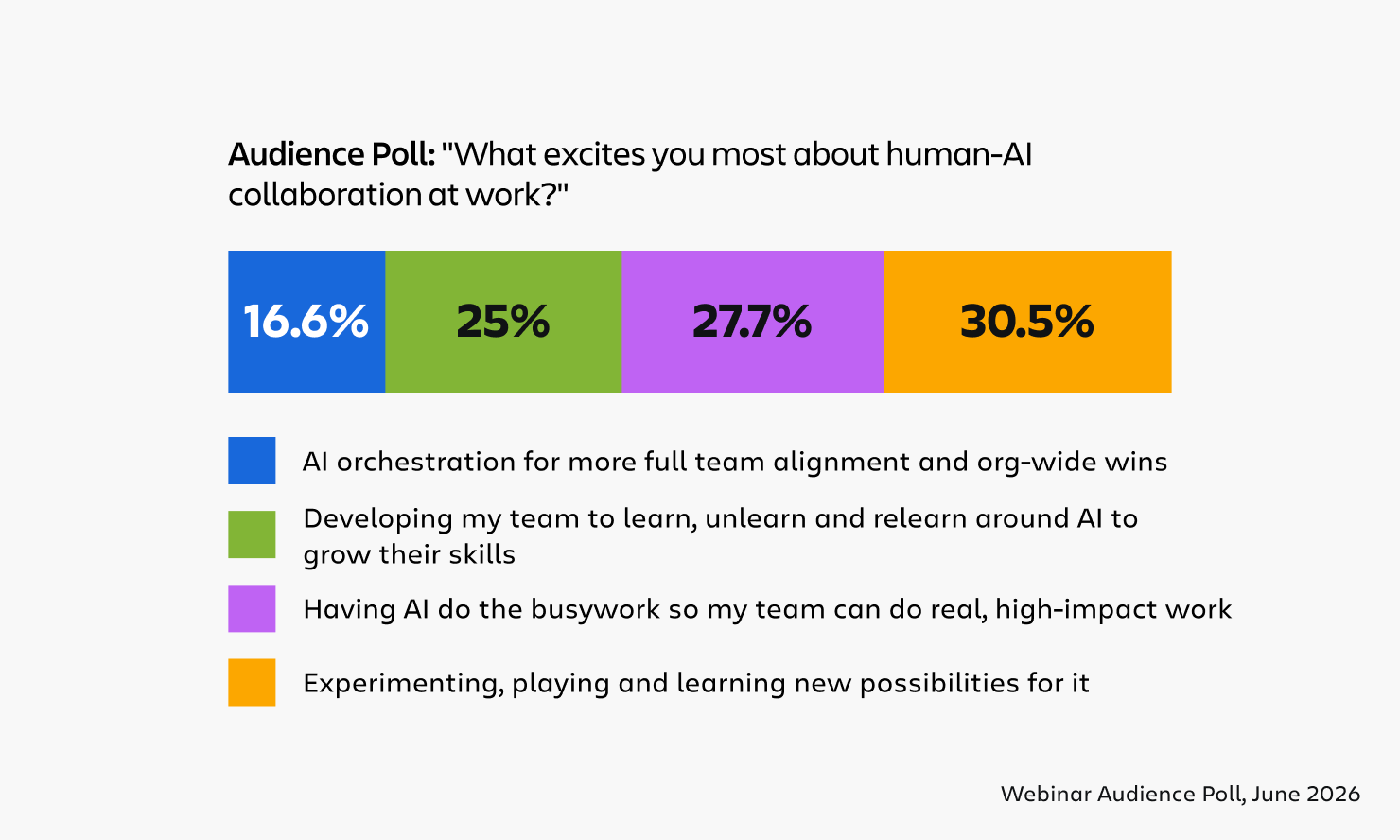
The gap between what’s needed (curiosity, experimentation, cross-functional play) and what’s happening (execution-mode overload) is where the fragmentation tax lives. Attendees validated this when asked about what excites them around AI. The majority leaned in on AI doing their busywork so they can experiment and play.
Implementing AI org-wide, where can CIOs start?
So where do CIOs begin? Kurtzman outlines three actionable steps IDC recommends for moving from individual AI acceleration to organization-wide orchestration. We won’t give them all away here, but they span governance, data foundations, and organizational mobilization – and the through line is people. “The more we talk about AI, the more important people will become,” says Kurtzman.
What’s clear is that the organizations which will thrive will be those that find time to be curious, create space for play, and orchestrate AI across the entire enterprise, not just in isolated pockets of individual productivity. The fragmentation tax is real. But so is the path forward.
To hear guest speaker Wayne Kurtzman’s full framework and the actionable details behind each step, watch the webinar on-demand.