Every week, it seems like the rules change for building products. We’re all figuring this out in real time, and one of the best ways we’ve found to do that is to sit down with other leaders who are in the thick of it. That’s why Atlassian recently started a series called AI Talks at our San Francisco offices with senior leaders building AI products. We break down what’s working, what’s broken, and what feels uncomfortable.
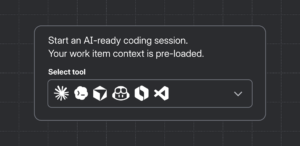
Recently, our Chief Product and AI Officer, Tamar Yehoshua, was joined by Maxime Prades, who leads Product at Cursor. We recently launched our Jira and Cursor integration, allowing Jira teams to assign work directly to Cursor, where a cloud agent will pick up the task and begin working.
Tamar and Maxime spoke about the biggest changes that AI has brought about, and how to think of AI as a complete mindset shift, rather than just a tool. Here are some of the key industry trends they discussed, and how senior leaders should be rethinking their product orgs.
The ever-shifting bottleneck
In our last AI Talks, the co-founder of Gamma, Jon Noronha, shared that one of the biggest challenges in building products right now is that with engineers getting more productive with AI, product managers have become the bottleneck.
Maxime echoed this feeling. “When I was at Zendesk,” he told us, “The engineers were always the bottleneck. But now, at Cursor, I’m often the bottleneck.”
If you’ve solved for engineering velocity but your decision-making, data, marketing, and review processes haven’t caught up, you haven’t actually gotten fast. The bottleneck has just moved. To get true value out of AI, you have to re-architect the whole value chain, rather than focusing on just one piece of it.
Should PMs be able to code?
Atlassian’s point of view is that product managers (PMs) should know how to code, though the central job of a PM is to know what to build, particularly in a world where the barrier to building is so low.
Maxime believes that PMs don’t have to write code, but they must be able to. He shared an example of something a PM on his team built that was particularly impressive.
“We have a separate repo called Prototypes, and that repo has a clone of some of the main UI elements from Cursor (IDE, Cursor Agent Window, Admin Dashboard etc.). It’s designed to help PMs prototype incredibly fast,” he said. “We can build highly realistic UIs that look just like our product in minutes. And that was just entirely built by a PM, every single line of code.
“It’s really neat, because we can build really fast prototypes that look incredibly realistic. That’s the kind of stuff where I expect a PM to be able to not only build prototypes, but also tooling to help them and other PMs build better prototypes.”
He added that now at Cursor, every PM, PMM, and User Operations person is able to jump in and contribute to the codebase or fix a bug directly from a Slack thread or something that bothered them in the product.
Ultimately, technical roles are blending. PMs and Designers are entering the codebase, but the real job of the PM remains unchanged: helping to decide what to build. Judgment and taste is something not easily replicable by an LLM.
As a result, we should be rewriting role expectations around capability and judgment rather than task ownership. We should be hiring AI-curious people who are builders with taste in PM roles.
If you’re not uncomfortable, you’re probably not experimenting enough
If you’re in a room where you’re asking, “are you doing enough?”, Maxime has a simple test he’s used a number of times.
“If you want to know if you’ve done the AI transition, ask yourself: are you uncomfortable enough?” he said.
He encouraged leaders to check in with their team frequently to ask how they’re pushing themselves out of their comfort zone with their ways of working.
Tamar added that she thinks experimenting with AI has to be fun. She’s found that the people who are most embracing AI are genuinely curious, and genuinely having fun in what they’re doing. This is especially true for leaders.
You have to have enough clear goals and guardrails in place, and a culture where people understand those goals and guardrails, so that they don’t build things that are not aligned with your vision and your roadmap.
Getting to actual landed impact with AI
At the end of the day, how much AI transformation and usage you’ve driven won’t matter if you’re not actually improving how business challenges are tackled with AI.
“In the world of AI, where code is getting incredibly cheap, pretty much anyone can build four versions of something in one evening and come up the next morning with four prototypes, each of which is sloppier than the other,” Maxime told us. “It comes down to what you’ve actually enabled.”
In previous roles, Maxime would try to make things measurably better with AI, then show another team that was skeptical how he did it, using dollar figures and time saved to show the real, landed impact. He suggested that one of the most persuasive ways to encourage AI adoption was simply showing someone a better way to do a repeated process they’ve been doing manually.
“I just find all these things to be incredible,” Maxime said. “I really do think there is something magical about being able to truly build as a PM. And once you get a taste for it, you can’t go back.”
However, he added that AI has also increased the volume of low quality work. It’s important to rise above this too – perhaps producing less and burning fewer tokens, by selecting only the most impactful work to help you achieve your goals.
Managing the transition
The PM role is more important than ever as demand for great product judgment rises. But the biggest change we’re living through is the pace at which we’re executing.
Now’s the time where technical teams should truly embrace a new way of working. It’s exhilarating, and there’s plenty of room to stay curious while maintaining judgment, motivation and taste.
The leaders who win the AI era won’t be the ones who shipped the most — they’ll be the ones who got uncomfortable on purpose, kept it fun, stayed focused on landed impact, and built the connective tissue for their teams to do their best work.