


“Wait… what did they mean by that?”
“We need to talk.”
“Can you fix this?”
“?”
Two or three words in a message, and suddenly you’re not doing the work in front of you, you’re replaying it in your head. Did I mess up? Am I in trouble? Is this urgent or just… urgent‑ish?
That little spiral isn’t just modern work life; it’s adding up. New research from Loom and Wakefield Research shows miscommunication is now a material business problem. Using Bureau of Labor Statistics data, that adds up to, on average, about $203 billion¹ in annual productivity losses in the U.S. alone — more than the annual economic output of roughly two-thirds of the world’s countries. In just the past month:
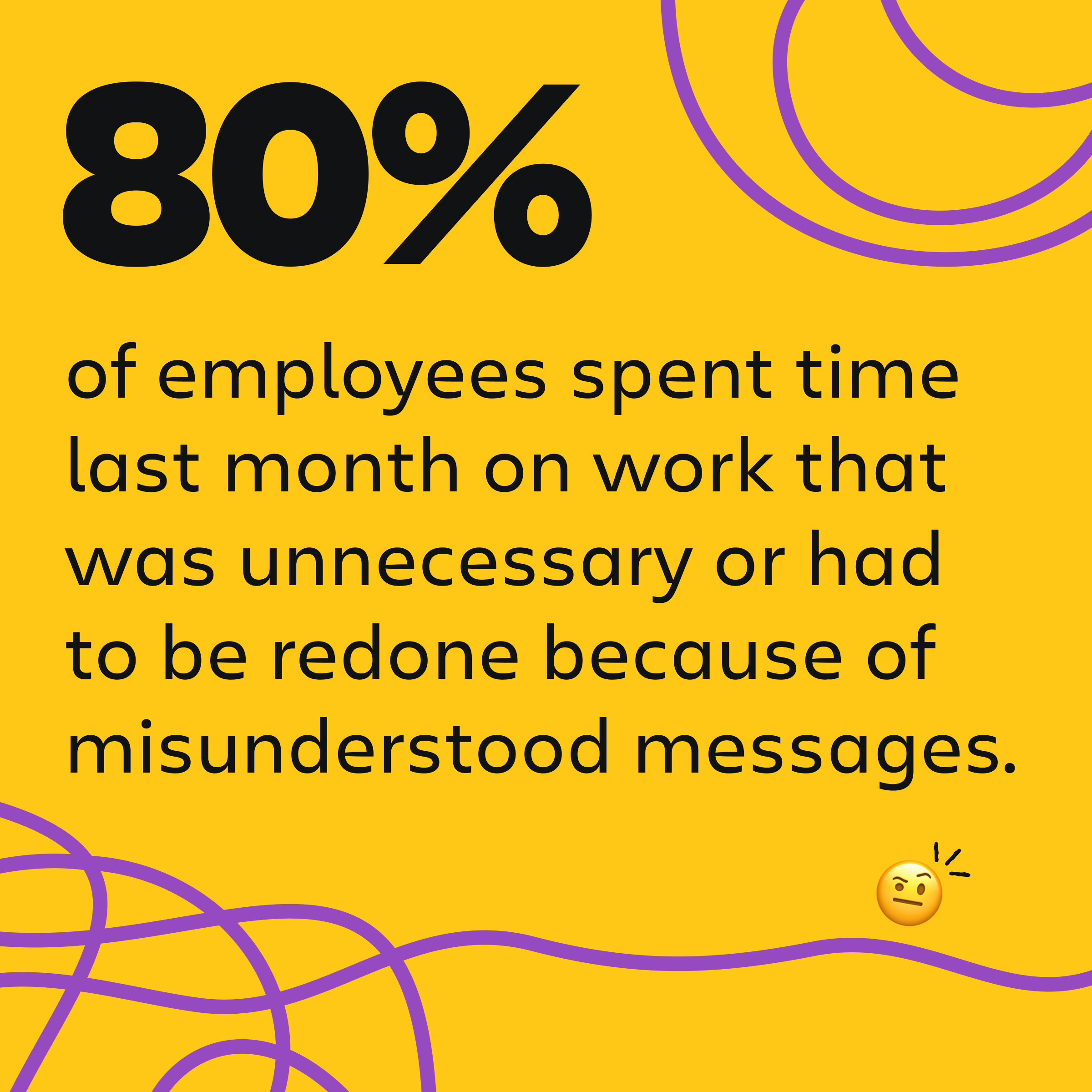
- 80% of workers spent time on work that turned out to be unnecessary or had to be redone because they misunderstood a written message.
- Almost a third lost more than half a workday to avoidable mistakes caused by confusing emails and chats.
- Nearly nine in ten say they regularly spend time each week just trying to interpret vague or unclear written messages.
This isn’t “people need better soft skills.” It’s bigger than that. Most teams don’t just have a people problem; they have a channel problem.
The hidden productivity tax of “What did you mean by this?”
Written communication is the backbone of modern work. It’s also the place where, if we’re not careful, a lot of effort quietly gets lost or misunderstood. Across teams, people are burning hours rewriting tasks, chasing clarification, and decoding messages that felt clear in the sender’s head but landed muddled in everyone else’s inbox. We see this pattern over and over.
At the leadership level, the impact is brutal: 1 in 5 VP‑level and above execs lost more than 24 hours in a single month to work that was later scrapped or redone because of miscommunication. That’s three full workdays gone.
Miscommunication makes it harder to think straight. More than four in ten workers say they’ve struggled to focus at work because of fear or anxiety over a misunderstanding. That’s not just lost time; it’s lost headspace.
When a DM feels like a performance review
Miscommunication doesn’t just slow projects; it reshapes culture.
Most workers (82%) have seen misunderstandings lead to real consequences: damaged coworker relationships, escalations to managers or HR, even lost clients and, in some cases, people being fired. More than one in four say they’ve wanted to quit after a miscommunication. And 61% have personally been reprimanded at least once because someone misunderstood something they sent.
Once you’ve gone through that, the next curt email isn’t “just an email.” No surprise: nearly two‑thirds of workers say miscommunication at work affects their thoughts or actions after the day ends. At that point, people start reading subtext into everything. Was that period too harsh? Why the “reply all” on something meant for one person? Where did the emojis go? Those mismatched norms quietly erode trust.

It’s not you, it’s the channel
Here’s the uncomfortable part: the tools we lean on the most are the ones workers trust the least.
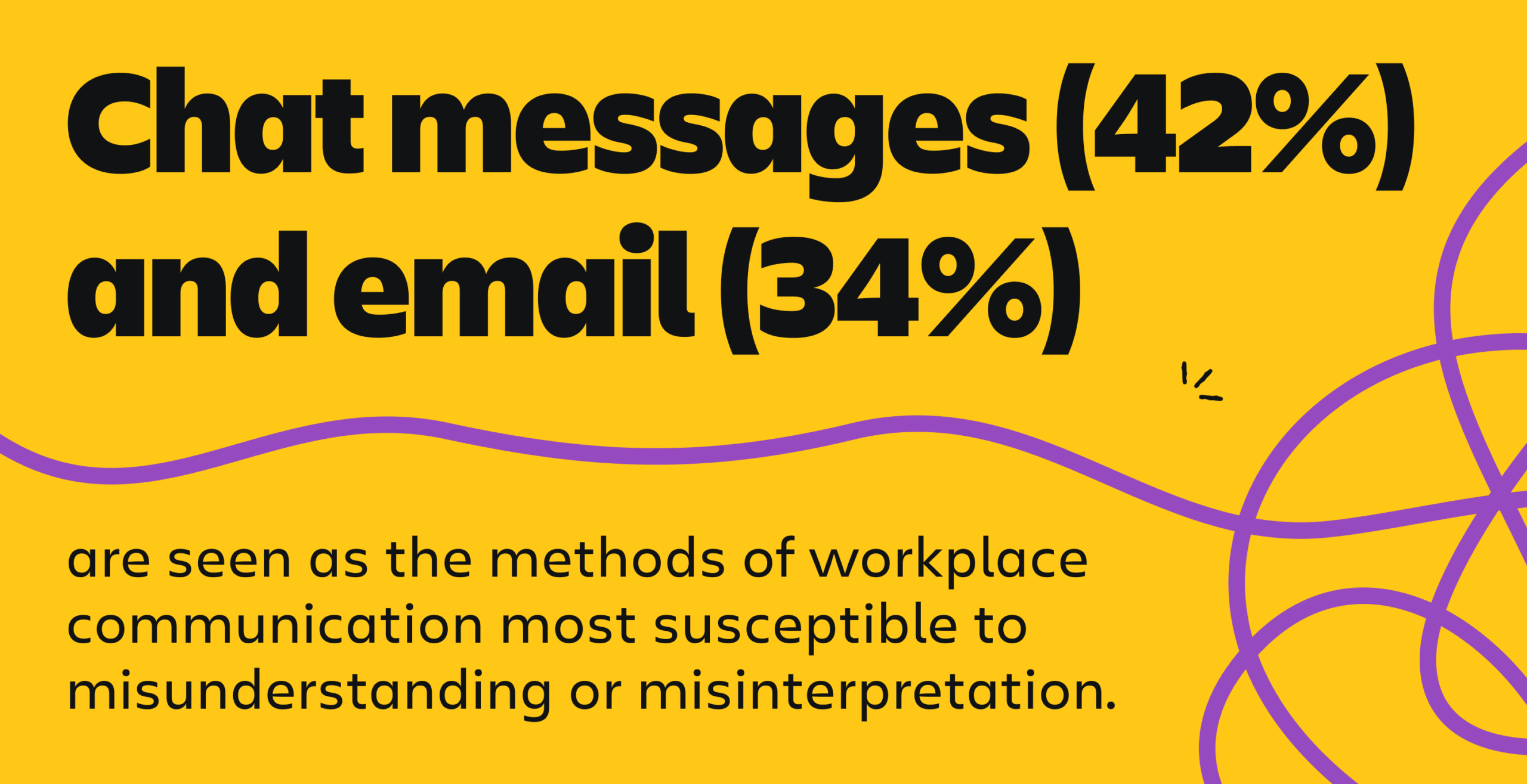
Across markets, employees name chat and email – the cornerstones of modern collaboration – as the communication methods most likely to be misunderstood. Chat tops the list at 42%, with email close behind at 34%. Even people who prefer email or chat say misunderstandings happen there all the time.
At the same time, there’s a big gap between what people use and what they think would actually help. Only 31% of employees have used asynchronous video at work. Yet 70% say a short recorded video message would have prevented their most recent miscommunication. And meetings aren’t the answer either, with most workers saying they’re already drowning in them.
So we’re cramming tone, intent, and nuance into a few lines of text, in channels everyone agrees are easy to misread, while underusing a format most people say would have made things clearer.
What actually helps: being intentional about channels
You don’t need a full‑blown communication overhaul. You just need to be more deliberate about which channel you use for what. Most teams never make that explicit.
A simple way to think about it:
- Chat is great for quick, low‑stakes questions and nudges. It’s not where you deliver sensitive feedback or explain a complex change.
- Email shines when you’re documenting decisions, giving context, or sharing updates people may need to revisit. It’s less helpful when you’re tiptoeing around a tough message or hoping tone magically comes through.
- Async video gives you the tone and visual cues of a face‑to‑face conversation for sharing out information, ideas, and nuanced feedback (without leaving long comments on a page).
One practical rule many teams adopt: if you’re about to send something that could reasonably be interpreted three different ways, that’s your cue to switch to a richer channel, often a short Loom, instead of another text wall.
Why teams are turning to Loom
Does this actually work in the wild? The numbers from 2025 say yes:
- Teams recorded 93 million Loom videos for walkthroughs, updates, feedback, and more.
- Those videos are estimated to have reduced the need for 245 million meetings. 2
- 44 million videos used Loom AI to auto‑generate titles, summaries, and chapters so viewers could jump straight to what mattered.
Async video gives teams a way to show tone, intent, and context in a few minutes, without a live meeting, and lets people watch and respond on their own time. It lowers the “emotional overhead” of guessing what someone meant in a one‑line DM.
Moving work forward, one message at a time
You don’t have to fix every message. But pausing to ask, “Is this the right channel for what I’m trying to say?” is a powerful place to start and a simple way to keep your team from getting stuck on what should have been a simple message.
About the survey methodology
Wakefield Research conducted this online survey of 7,000 knowledge workers across seven markets (U.S., U.K., Germany, France, Spain, Australia, and India) from December 12 to December 22, 2025.
Respondents work full or part time.
1 Estimated annual cost is based on Bureau of Labor Statistics earnings and employment data for ‘U.S. professional and business services workers’, multiplied by survey-reported median time lost each week by all U.S. respondents interpreting unclear emails and chats, annualized across the workforce to produce an economy-wide dollar estimate.
2Time‑savings methodology: we use video views and video length to estimate time saved, assuming that 10 minutes of viewing by a user can avoid the need for a 30‑minute meeting.
