Here’s a stat that’s been rattling around in my head. In our 2026 AI SDLC study, 94% of engineering leaders told us they’re using AI, but only 6% have the systems to actually scale it across their whole software lifecycle. Almost everyone is playing with agents, yet almost no one can let agents run at scale without things breaking.
The gap between “cool demo” and “I trust this across hundreds of engineers” is exactly what we’re trying to close with the new features we are shipping today.
First problem: agents that don’t know anything about your world
Agents fail when they don’t understand your world: your architecture, your decisions, your standards, the institutional memory that lives in your team’s heads, documentation and communication channels.
We’re grounding agents in a shared context layer, with governance baked in, so the same system that gives agents context also controls what they can touch:
- Code Context, built on Atlassian’s Teamwork Graph, gives Rovo and coding agents secure intelligence across multi-repository codebases. This enables more accurate results across the entire lifecycle, from vetting backlog ideas for architectural feasibility and generating code-aware implementation plans to accelerating bug triage and root-cause discovery.
- Agent Context Controls let platform teams govern which agents can operate in a space and exactly what they’re allowed to see.

Better context, better outcomes.
The payoff of better context is real. In a recent analysis by DX, teams whose AI tools used the most Atlassian Teamwork Graph context shipped roughly 64% more per developer.
Second problem: everything happens one prompt at a time
The next shift in the AI SDLC isn’t more terminal windows open on your second monitor. It’s governed agentic execution (aka, work that runs as an always-on loop instead of a one-off session). Here are new features coming soon to Jira to turn engineering backlogs into always-on, automated execution cycles:
- Agent loops in Jira automate the path from backlog to pull request by continuously scanning for well-defined, unassigned work items, delegating them to Jira Coding Agent for execution and testing, and opening ready-to-review PRs directly in Jira.
- Standards enables platform teams to define organizational coding standards once and map them to repositories, automatically sharing consistent quality guardrails across every agent and developer operating in the codebase.
- AI Review puts a dedicated agent on every pull request, checking it against those standards and flagging problems before they reach a human.
Put it together and the loop is: developers define intent and guardrails → agents execute in parallel → developers and PMs review and approve what actually ships → agent updates shared context based on completed work. You stay in control of the merge button but stop being the bottleneck for everything leading up to it.
Third problem: nobody can prove any of this is working
Measuring AI impact across an engineering org is hard. There’s no perfect playbook yet, but leaders still need a clear, grounded way to understand where AI is helping and where it isn’t. That’s why we built these accountability and visibility tools directly into the system:
- DX for Agentic Development measures AI impact across throughput, quality, adoption, and cost, mapping what you spend to what you ship. It unifies AI Code Insights, tool and MCP tracking, model-to-task fit, and academic-validated Agent Experience (AX) research with rich software context and guardrails, closing the loop between AI observability and governance.
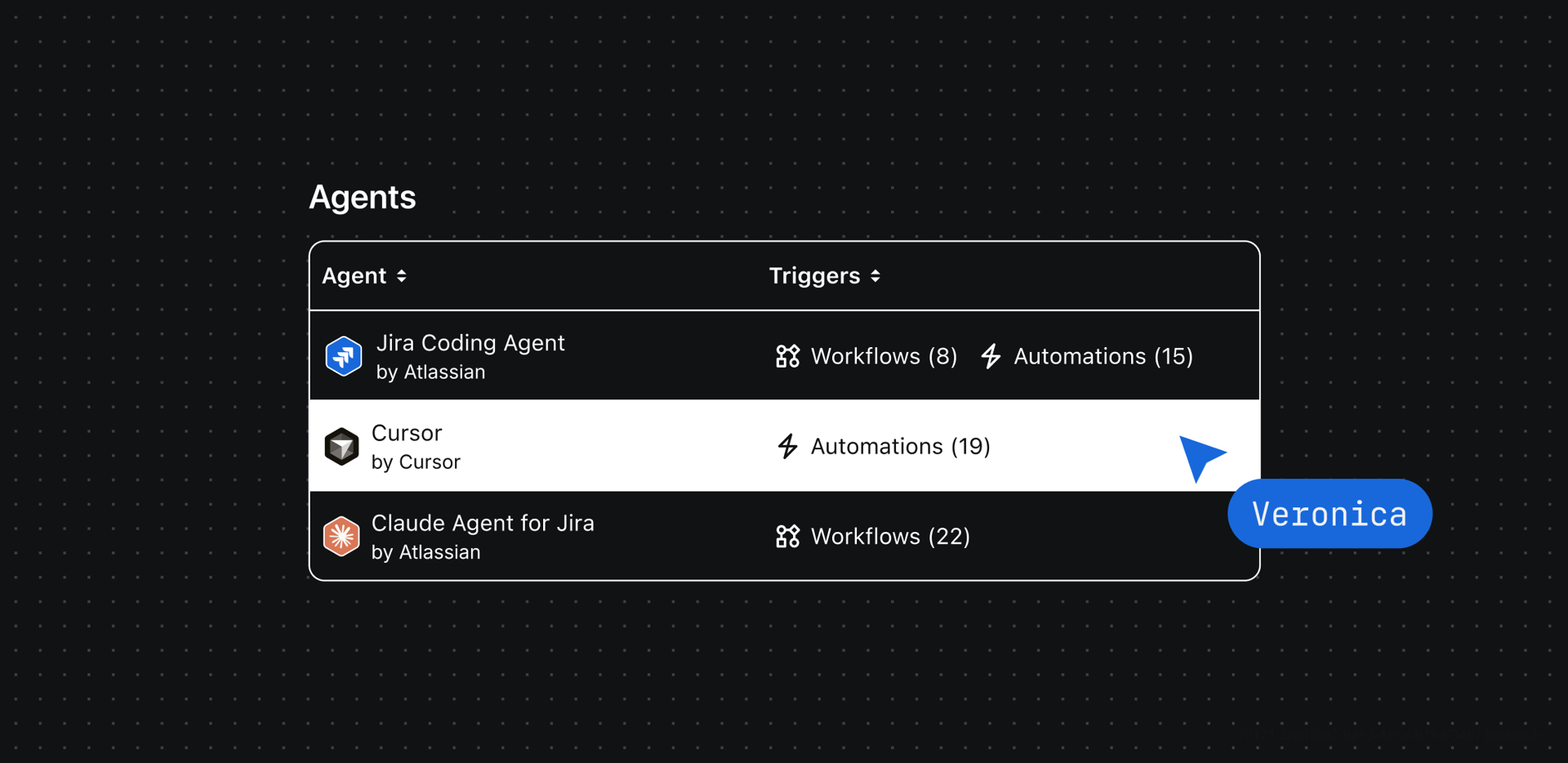
- Jira Agent Usage Dashboard helps team leaders understand which agents are used in their workflows and improve team delivery velocity with agents.
This is what takes governed agent loops from an experiment to something you can put in front of your board.
Let the loop run for you
For the past couple of years, the story of AI in engineering was about individual magic moments. A slick autocomplete, a clever prompt, a demo that made everyone lean in. That’s great, but you can’t run an engineering org on moments.
Moving from ad hoc agent sessions to always-on workflows is how AI actually scales across an engineering org. Build on top of context so agents know what they’re doing, govern agentic execution so the work keeps moving, and measure so you can understand what’s working. That’s the whole game, and it’s what we’re shipping today.
I can’t wait to see what your teams build when the loop is running for you.
Join us on September 22, 2026 for the State of AI SDLC, a digital summit for engineering and product leaders exploring how AI is changing the way software gets planned, built, and run. Reserve your spot.
Availability: Code Context is gradually rolling out to paid Atlassian customers through open beta. Agent loops, Standards, and AI Review are available in private early access. Agent Context Controls and Agent Usage Dashboard will be generally available to paid Jira customers in the coming months. DX for Agentic Development will be generally available for Atlassian DX customers this quarter.