Meet AMP: the Agentic Multiplayer Protocol for human-agent collaboration
G’day from Amsterdam.
What a week. The energy at Team ’26 Europe is hard to beat – thousands of people who build, run, and fix things, all here together, testing, sharing, and learning.
Events like this remind us that the best work is never done alone. Teams improve ideas. They catch what one person might miss, and move faster together.
AI should work the same way. But at many enterprises today, it just…doesn’t.
Most AI adoption starts in single-player mode, with one person typing alone into a chat window on their laptop. That might make an individual faster, but speeding up one person or isolated tasks doesn’t move the needle for a team.
The real shift happens when AI becomes multiplayer, with agents working right alongside their human teammates.
We’ve spent years making teamwork more connected and interoperable through open APIs, our developer ecosystem, the Teamwork Graph, Atlassian MCP, the Atlassian CLI and emerging Agent-to-Agent standards.
Today we’re taking the next step with AMP, the Agentic Multiplayer Protocol.
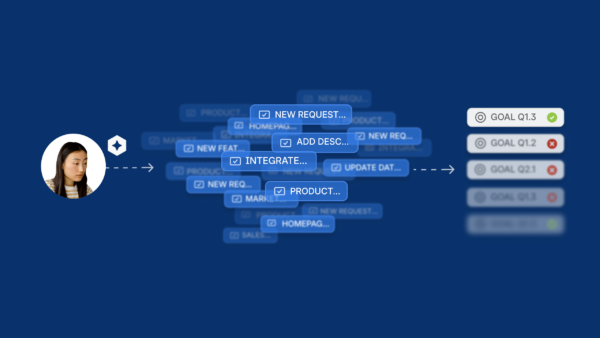
AMP is the foundation for connected human-agent teamwork. It gives agents the context, visibility, and permissions to contribute safely across Atlassian and beyond. It brings work together through three interconnected layers:
- In-the-Flow Collaboration: Agents work best when they’re embedded right where work happens. With AMP, you can:
- Brief an agent with a quick Loom video, @mention one directly in a Confluence doc, or debate an approach in a Jira comment thread.
- Plug them straight into Jira workflows to handle triage or route work automatically.
- Connect tools, like Figma or your IDE, via MCP, letting context and agentic work flow seamlessly across your entire stack.
- Identity and Shared Presence: Teams need to see what agents are doing, know who owns them, and understand how they’re advancing work. With AMP:
- Every agent has a clear owner, a distinct profile, and real-time attribution.
- When you’re editing a doc or looking at a whiteboard, you see the agent’s cursor right next to those of human teammates.
- When developers run agent sessions locally on their laptops, AMP bridges that session straight into the Jira board so local work stays visible to the whole team.

- Context and Governance: Agents need the right context and permissions to work safely. With AMP:
- Every agent is grounded in the Teamwork Graph, pulling real institutional memory from across your SaaS tools.
- Permissions are scoped. An HR agent inherits the strict access of the person prompting it, while a Helpdesk agent runs on its own dedicated service account.
- You get a full audit of agent activity: who triggered the agent, what data it touched, and built-in human checkpoints.
But AMP isn’t just about the technology. Agents aren’t replacing people, they’re joining teams so we need to move beyond thinking only about 1:1 human-agent interaction and design experiences that enable mixed teams of people and agents to collaborate together. AMP uses thoughtful design patterns to make the human-agent experience feel intuitive, delightful, and deeply integrated across the Atlassian platform.
AMP begins rollout today. Learn more here.
120+ innovations across the Atlassian platform
AMP sets the rules for how people and agents work together. But an agent on your team is only as good as what it knows, what it can do, and how much you can trust it.
We’ve shipped over 120 enterprise capabilities in the last year and Team ’26 Europe brings the next wave. Here are a few we unveiled this week:
- A more capable Atlassian MCP server: Whether you work in Cursor, Claude, VS Code or a CLI, Atlassian context should follow you. The new MCP server covers more ground while using fewer tokens – up to 25% less than for the same Jira and Confluence work (in internal benchmarking on Claude models).
- Richer context in the Teamwork Graph: The Teamwork Graph now reads your source code right down to the function, symbol, and class level, with our new Code Search app. Structured data is a native context type now, so you can query your lakes and warehouses from anywhere with Atlassian Insights.
- More connected context: Deep internal context is only useful if it connects to the systems where teams communicate and manage access. The Teamwork Graph now spans 7 context types and 250 billion connected objects, with 80+ connectors. New additions include Zoom, Gong, Microsoft Entra ID and Google Identity. Artifacts gives agent outputs a permanent, governed home and indexes them back into the graph. See everything new in Rovo and across the Atlassian platform here.
- Track local agent sessions: Soon, you can bring agent sessions from IDEs and terminals into Jira, so context carries forward and agent activity is governed alongside human work.
- Identity and control for every agent: As agents take on more work, teams need to know what each one can see, what it can do and who is accountable for it. We’re introducing agent accounts and a non-human identity inventory. Every agent, app, and service account – ours and others -receives a full identity, so admins can manage autonomous actors alongside people and revoke access when needed. We’re also rolling out local EU AI inference, keeping LLM processing on models hosted in the EU.
- More across the platform: We’ve also added new capabilities across the Teamwork Collection, Strategy Collection and Service Collection, alongside new features for engineering teams building an AI-native software development lifecycle.
Same mission, new teammates
Each of these announcements advance our mission to unleash the potential of every team.
We started Atlassian nearly 25 years ago to do exactly that. The job hasn’t changed, even if the teams have.
We’re betting that most teams will have people and agents working side by side, using the same tools and pursuing the same goals. What won’t change are the fundamentals of great teamwork. Shared context, clear ownership, and end-to-end visibility.
Thanks to everyone who joined us in Amsterdam, both in the room and virtually.
Grateful to be building this future with you.
Mike