For too long, teams have been trapped in the service status quo: a reactive loop of break-and-fix, siloed tools, lost context, and ticket limbo.
The cost is real. Forrester Consulting found that 97% of enterprise leaders struggle to meet service expectations, with lost productivity as the top business cost. Meanwhile, adoption is moving fast. While only 21% of organizations use agentic AI today, 80% plan to within the next 12 months.
Atlassian’s vision for the future of service management is service that is delivered directly in the workflow, issues that are resolved proactively, and AI that is powered by deep organizational context.
Today at Team ’26 Europe, we’re introducing innovations across the Service Collection designed to deliver on this vision and prepare teams for service management in the AI era.
Embedded service that keeps things flowing
The best service is the kind that unblocks teams to do their best work across dev, IT, business, and customer service teams.
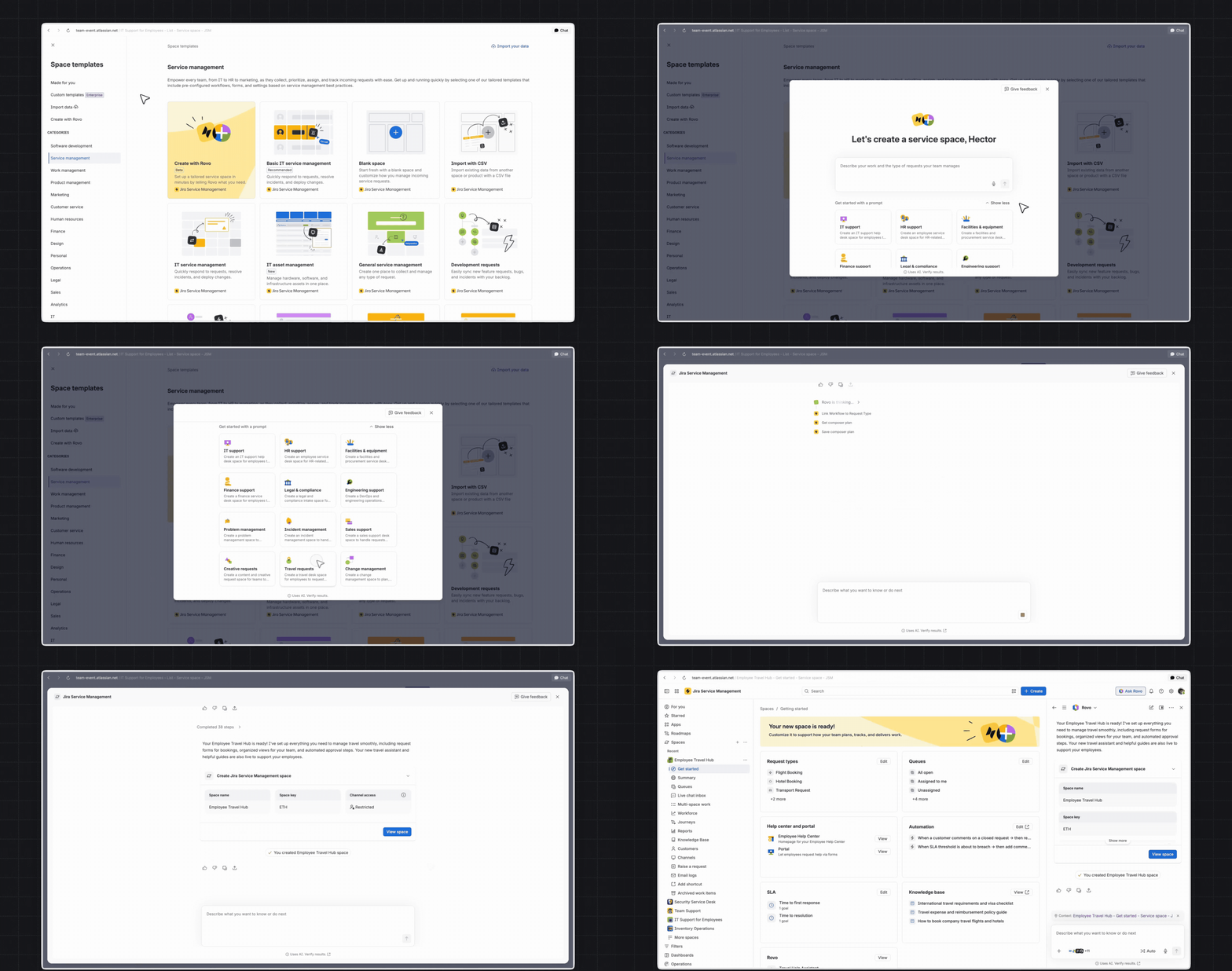
To get up and running instantly, Solution Composer (open beta) lets teams spin up a tailored service desk in minutes. Instead of navigating dozens of configuration screens, simply describe what you need in natural language. Rovo orchestrates the request types, workflows, SLAs, and portals behind the scenes, getting teams from zero to operational in minutes.
But getting your service desk up and running is only half the battle, you have to make sure you have the right people running it. Workforce Management in JSM (now GA) makes it easier than ever to connect and coordinate that work. By unifying schedule management, real-time availability tracking, team capacity, and skill-based routing, JSM automatically assigns incoming work to the right person at the right time.
Proactive, not reactive
AI makes everything faster, including how fast systems break. Delivering exceptional employee support in the AI era means keeping pace and resolving issues before anyone feels the pain.
Proactive Service Management (closed EAP) turns silent friction into an automated resolution. Powered by Rovo, JSM continuously monitors endpoint device health, detecting performance degradation early to fix issues in the background or routing requests to the correct service team, shifting digital employee experience (DEX) from reactive ticket-churn into a continuous, proactive flow.
For operations teams, being proactive starts with effective change management. After all, the best incident is one that never happens. New AI Change Risk Assessment workflows are generally available in JSM, pulling context from the Teamwork Graph to inform risk scores around business, technical, operational, compliance, and financial factors. Rovo even suggests mitigation actions that ops teams can implement with one click.
Context, context, context
A new study from Forrester Consulting makes it clear: context is the number one challenge for teams looking to adopt agentic AI for service. Only 18% of organizations report that their knowledge is connected to or part of a broader context graph. Without deep, bi-directional connections between people, knowledge, services, and physical assets, AI remains surface-level. Limiting the speed, accuracy, and relevance of service experiences.
With Service Collection, Assets is connected right into the Teamwork Graph. That means every asset, CI, or custom object is linked to the people, teams, and changes around it.
To provide more visibility and context around hardware estates, we built a Hardware Asset Management (HAM) module directly into Jira Service Management, bringing physical IT assets right into the heart of service workflows. AI insights within the new HAM console highlight trends – like warranty expirations or device shortages – and enable admins to instantly trigger automated replenishment workflows before work is disrupted.
Backed by a turnkey Common Data Model and flexible Discovery options from Atlassian, Flexera, and Lansweeper, hardware records natively connect to the Teamwork Graph.

We’re also making context available everywhere with service and operations context where you work (closed EAP). Teams can deliver end-to-end incident resolution and service request management right from where they work in tools like Slack, Teams, or Claude. Powered by JSM and the Teamwork Graph as the orchestration and context engine, AI agents trigger specialized workflows like incident investigation and request resolution without switching tools or losing information. The agents remain permission-aware and maintain governance guardrails set in JSM.
Delivering exceptional service in the AI era
Delivering exceptional service in the AI era requires more than faster responses – it demands smarter connections between people, knowledge, and tools. With Service Collection enhancements across actionable AI agents, proactive monitoring, and ambient workflows – all powered by the Teamwork Graph – we’re transforming service from an isolated bottleneck into an AI-native engine for productivity. It’s time to move past ticket limbo and build a service experience that leaves legacy playbooks behind.
Explore more at Team ’26 Europe
We announced these updates at Team ’26 Europe, our annual user conference, along with the rest of this year’s news. The sessions are available live and on demand if you want to go deeper.