“I love workforce disruption!” …said no one ever.
The rise of generative AI is exciting, but it’s okay to admit that it’s disruptive, too. How product teams collaborate, what’s expected of them, and what it means to be a PM or designer is changing fast.

How AI turns product managers back into builders
AI is changing how product teams build, learn, and ship. But “AI fluency” isn’t a status you read your way into. It’s something teams earn by building.Product thinker and Product Growth author Aakash Gupta lays out a practical pathway for PMs, designers, and engineers to level up. In his words, when leaders ask how to […]
Many teams have conflicting feelings. There’s energy and momentum to moments like this, but it’s also destabilizing to wonder what your workflows will look like next year (or next week). For many, it feels less like a rocket launch and more like turbulence: anxiety, uneven adoption, moments of brilliance followed by doubt.
These feelings are valid. But history shows us that new tech tends to create more jobs than it eliminates – and it takes a long time to see its true impact on society. All this means that while AI does change our work lives, it might not be in the ways we expect.
Today, we’re unpacking how leaders and teams can thrive in this uncertain era. That starts with addressing a foundational fear: With AI changing how we get work done, who are we as product professionals?
We’re featuring voices from our podcast, Product in Practice, where we dive deep with product leaders experimenting in real workflows.

Kene Anoliefo on turning AI anxiety into AI fluency
Learn how to transform AI anxiety into productive action with product leader Kene Anoliefo. Discover her practical framework for AI adoption—the 3 Ps (People, Process, Platform)—and why context enablement, not just technology, is the key to building AI fluency in your team. From creating psychological safety to rewarding knowledge sharing, get actionable strategies for leading product teams through AI transformation.
These aren’t laws to follow, but guardrails to help you navigate. If you finish with sharper language, better questions, and a few action items to take back to your team, we’ve done our job.
AI is changing who we are at work, and how we work together
Designers, PMs, and engineers are quietly asking, “Who am I in the age of AI?”
When AI models can write specs, generate designs, or run research, it’s reasonable to worry that your craft is being automated out from under you. Even though most of us know AI isn’t fully replacing employees anytime soon, it still changes how we see ourselves as professionals.
Pushing these feelings under the rug doesn’t serve anyone. Kene suggests acknowledging the discomfort, then pointing to a bigger identity: the people who design and improve these systems, thereby empowering many others.
Leaders who acknowledge that this transition isn’t easy can reduce defensiveness, and help team members get excited to contribute. Because this is an exciting moment – it’s just also full of uncertainty.
If it feels like everyone is running faster than me, the trick is helping teams realize that feeling is normal.”
Kene Anoliefo
As AI helps people move faster, it also blurs responsibilities. Aakash is seeing PMs, designers, and engineers increasingly overlap: a PM prototypes, a designer codes an interaction, an engineer synthesizes research. In this interdisciplinary new era, collaboration and teamwork practices become even more crucial.
“AI is turning product teams into jazz bands where everyone can play more instruments,” says Aakash. “That’s exciting, but it’s also noisy without a rhythm.” Who owns what decisions? What counts as done? Without new norms, teammates can step on each other’s toes. The fix isn’t to bring back old silos, but to be clear about who does what and how work gets handed off.
Elena points out that when you’re building AI‑native products, the usual growth levers collapse. Sometimes, all you’re working with is one prompt box. “That compresses the roles of marketing, product, and growth into one interaction,” she says. “It’s exciting, but also disorienting if teams don’t reset how they coordinate.”

Ravi Mehta on shifting from craft to judgment in the age of AI
When Ravi Mehta talks about AI, he doesn’t start with tools. He starts with strategy. A longtime product executive at TripAdvisor, Facebook, and Tinder, and now a product advisor and co-creator of Reforge’s AI Strategy Program, Ravi helps companies compete and win in a rapidly changing environment. “A lot of people are asking: how do […]
What is AI fluency?
Questions are spinning through everyone’s mind: “What should I learn? Which tools matter? What if I say the wrong thing?” Left unaddressed, teams can easily slip into burnout. The leadership challenge is to metabolize that uncertainty: Make space for it, name it, and convert it into focused exploration.
That’s the goal – learning, experimentation, and comfort with feeling out of your depth. Gen AI tools hit the scene less than four years ago, and they’re evolving all the time. Trying to become an “AI expert” is a recipe for failure and frustration.
This is what we mean by AI fluency. It’s not technical mastery – it’s the practical confidence to use AI to think, make, decide, and know when not to. If proficiency is “I can execute tasks,” fluency is “I can converse, critique, and compose with this medium.”
💡AI fluent teams share a few traits:
- They ask better questions of AI, moving from “do this task” to “help me reason about options,” “surface trade‑offs,” or “generate counter‑examples.”
- They understand limits and biases, treating outputs as proposals to be interrogated, not truths to be obeyed.
- They integrate outputs into real workflows, connecting drafts, analyses, and prototypes to the tools and rituals where work actually moves forward.
- They normalize experimentation. Trying, failing, and learning are part of the operating system, not extracurriculars.
But there’s a catch – there’s no easy path to get there. Not every experiment moves teams forward, and that’s ok. Some patterns are useful, others are distractions. Leaders must be prepared to support and make space for all of them.
“Leaders can’t shortcut fluency,” says Ravi. “It’s not about buying a tool; it’s about building confidence, one workflow at a time.”

Laura Burkhauser on helping teams rewire for AI
When Laura Burkhauser talks about AI adoption, she doesn’t sound like a consultant. She sounds like someone who’s been in the trenches. “We talk about a tech acceptance scale at Descript,” she says. “It goes from hostile to skeptical to converted to rewired.” The metaphor fits Descript, where Laura leads the product team, helping make […]
🧪 The Antidote: tips and frameworks for fearless AI adoption
Channel anxiety into progress
Kene reminds us the AI landscape is meant to be overwhelming right now. Instead of trying to sweep anxiety under the rug, leaders can use it as energy to move forward.
Consider a recurring, time‑boxed forum where people name worries, share near‑misses, and convert them into questions worth exploring next week. The goal is to keep moving together.
Anchor in what doesn’t change
Amidst all the flux, three things remain core for product managers:
- Talking to customers directly.
- Crafting a unique product vision (AI can’t set your destination).
- Understanding how to differentiate and distribute in markets where commoditization is accelerating.
When facing anxieties or uncertainty on your teams. Elena recommends bringing the focus back to this core foundation. Understanding customers, creating a unique vision, and standing out in competitive markets will never be automated away.
Run rituals that reward curiosity
Ravi points to the power of small, social loops. What if your team held a 20‑minute weekly showcase where PMs, designers, and engineers demo an AI assist that saved them time or failed interestingly? Over time, the ritual builds a library of patterns and makes experimentation normal, not heroic.
Simulate, automate, delegate
At Descript, Laura Burkhauser has seen creative and product teams wrestle with the same question: how do you go from dabbling with AI to relying on it? For her, confidence comes in stages: simulate → automate → delegate.

Teams begin with simulation: imagining AI in their existing workflows, by trying out general-purpose tools. They might experiment with drafting a PRD in Claude, or pulling highlights from research transcripts in ChatGPT. “When teams first try AI, they’re not looking for efficiency,” Laura says. “They’re trying to see what good even looks like.”
From there, patterns emerge – and these can be automated. People notice the repetitive tasks that eat their attention: weekly progress updates, changelogs, customer summaries. At this point, automation starts to pay off. “The real question becomes: what are the things we should never waste human attention on?”
Eventually, some workflows mature enough to delegate. Here, AI takes on whole streams of work, with humans setting direction and applying judgment. “Delegation isn’t abdication. It’s giving AI the stage so humans can play a higher note,” Laura says.
Laura emphasizes that not every team moves through the stages at the same pace. Some spend months experimenting, others leap quickly to automation.
What matters is not racing ahead, but making sure each step leaves you stronger for the next one.”
Laura
⚡️ Takeaways for leaders
What if progress wasn’t judged by speed, but by how much your team learns at each stage before leaping to the next?
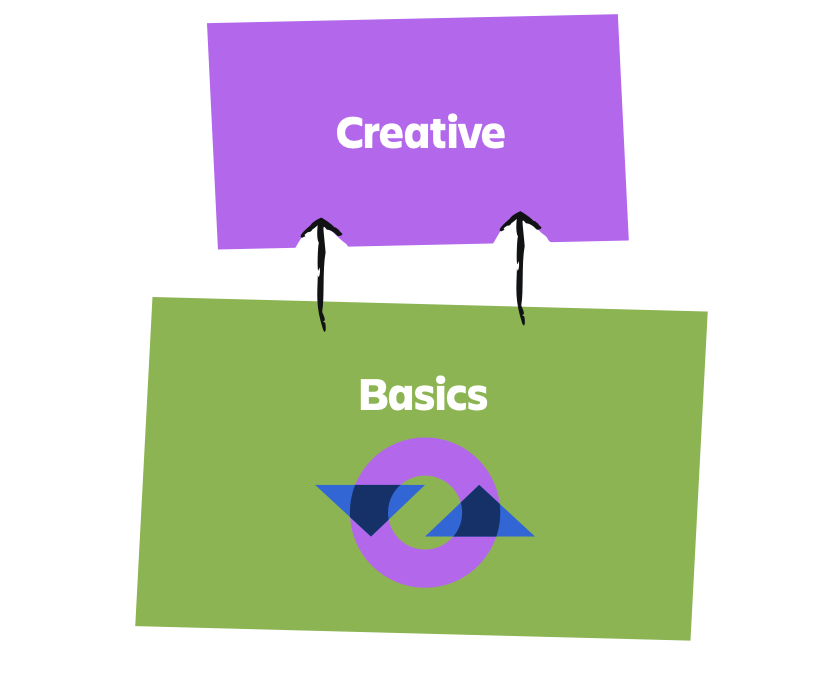
Automate the basics, elevate the creative
Elena Verna’s lens is simple: AI should free humans from the repetitive “growth 101” playbook so they can focus on creativity and strategy.
Automate the 101
Most companies hire growth leaders to do the same baseline optimizations: onboarding flows, email lifecycles, A/B tests. Those should be codified into products themselves, so growth experts can work on innovation instead of repetition.
Solve the empty-state problem
Humans struggle with a blank page. Elena encourages teams to treat AI as the “first 40%,” producing a baseline draft, prototype, or spec. People’s authentic judgment and creativity then shape the second half.
Loosen the guardrails (temporarily)
Rigid procurement slows exploration. Elena urges leaders to allow bottom-up experimentation before standardizing. “You can tighten up on budget and compliance later,” she says. “Use the next six months to let employees explore.” Share openly about how these experiments went – sucesses and failures. That learning will push the whole team forward faster.
AI isn’t 100%. It’s “average intelligence” that can take you 40 or 50 percent of the way. The real lift still comes from human judgment layered on top.
⚡️ Takeaways for leaders
Where can you automate the “growth 101” in your org so your people spend more time on the work only they can do?
Go deeper on AI fluency
We have so much more to say about this seismic shift in how we work, collaborate, and build great products together.
In our new ebook, AI fluency: The new product superpower, we’ve gathered even more insights from these experts on how AI is changing our roles and evolving expectations – plus practical advice on how to adapt.