


Browse the blog
Filters

How to graduate from email support with Jira Service Desk
First, it’s important to remember that change is an evolution. It doesn’t just happen overnight. Having realistic goals means it will be more exciting once your team hits them out of the park. After Jira Service Desk is set up, customers can contact support by either emailing requests (which then become tickets) or through the customer portal. Ideally, all customers would use the customer portal so the right information is given from the start and so their requests can be categorized easily.

Confluence 101: using pages (so the dog can’t eat your homework)
The second Confluence 101 article talks about creating content with pages. It’s meant to give you the foundation necessary for confidence and success creating useful Confluence pages. The article covers the basic concepts of pages, some best practices, and tips and tricks.
Stash levels up deployment flexibility with AWS support
Flexibility is an important consideration for all professional teams, whether it concerns infrastructure, workflow, or scalability needs. It’s a factor that is always first and foremost for us when we’re building products and it’s something our customers have come to know and love about Atlassian. With respect to infrastructure in particular, these needs are changing. Gone are the days when on-premise solutions were the status quo – with the advent of affordable, secure, and scalable Infrastructure as a Service (IaaS) solutions, we’re now seeing a trend towards deployments in the cloud or a hybrid mix of both.
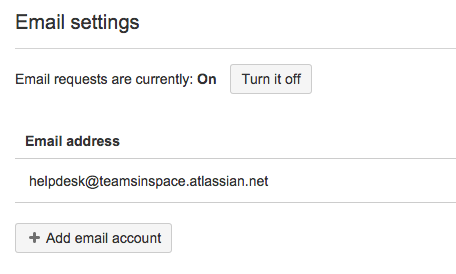
Graduate from email support: How to set up email support with Jira Service Desk
If you rely on email for internal support, chances are valuable time is wasted going back and forth trying to get the right information. Work is assigned inefficiently, leading to slower resolution times and unhappy customers. Plus, you’re not able to report on progress to show the value of IT to the rest of the business.
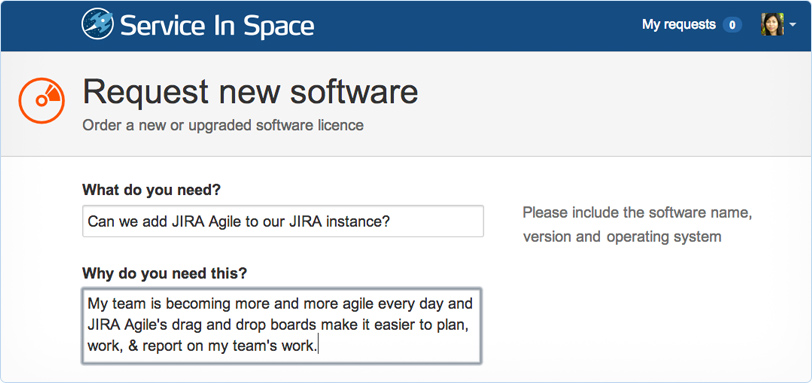
Collecting requests the easy way with Jira Service Desk
We often collect feedback and requests from people outside of our team. If they find a bug, need something done, or have a feature request – somehow and some way, they need to reach us. As an Atlassian, I prefer working in Jira. It’s my favorite place to plan, track, and get things done, however, I find that sending colleagues (who are often non-technical) to Jira introduces them to an unfamiliar interface they don’t necessarily know how to navigate.

Play it safe: disaster recovery with Jira Data Center
Since we launched Jira Data Center in July 2014, Disaster Recovery has been one of the most frequently requested features from customers. Jira is business critical and customers want to be prepared and ensure its availability in the event of a disaster. Well, we listened and we’re excited to announce that it’s here! With Jira Data Center 6.4, customers can now configure a cold single or multi node standby site in a geographically separate location.
Happy birthday, Git! Cheers to 10 years
Dear Git, Watching you grow up over the last 10 years has been quite the journey. When your creator, Linus Torvalds, first announced you were coming into this world after only three days of coding, we had no idea how big of an impact you would have on all of our lives. You allow teams […]
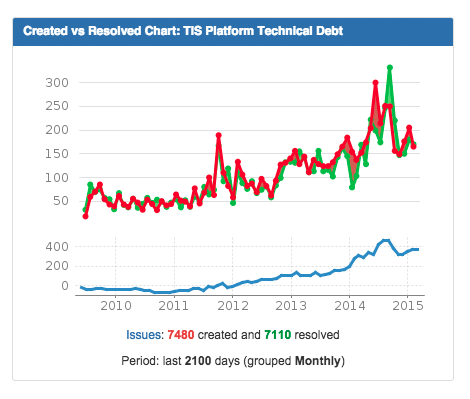
3 steps to taming technical debt with Jira
Learn how to reduce technical debt.
Lessons learned from our first Gradle plugin for Android, Victor
The Android team at Trello is happy to announce our first open source Android library, Victor! It’s a Gradle plugin that lets you use SVGs as resources in your Android apps. Victor started as a request from our designers. They were regularly creating vector icons that they would later convert to PNG for Android. Could we […]
Quick Tip: Getting Emacs and IntelliJ to play together
As I’ve mentioned before, I’m gradually working towards my grey-beard badge so for most of my programming I tend to use Emacs. However when I moved into the order-systems team I adopted IntelliJ IDEA, which is our weapon of choice for Java development at Atlassian. This is because while Emacs is a great text editor, IntelliJ takes a holistic and […]
Tip of the week: Configure your Java version in Tomcat
During my tour of duty providing support for our Tomcat and Java based behind-the-firewall apps, a common concern was the effect of updating Java or the JVM in the host after installing the product, and how it may affect a running production system. As some operating systems will auto-update system libraries such as Java with little notice, this […]
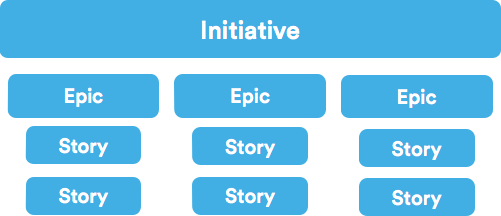
Get started with these Jira Portfolio demo videos
Are you using Jira Portfolio but unsure about where to start? Or maybe you’re not using Jira Portfolio but want to see how it works? Good news! We’ve created a series of Jira Portfolio demo videos to teach you the fundamentals so you can get your projects into Jira Portfolio in no time. There are 9 videos in total (whoa!) but each one is only 3 to 5 mins long (phew!). If you’re new to Jira Portfolio, we recommend watching them in order.
Announcing Google Apps integration for Confluence Cloud
Keeping up with numerous user directories for email, Confluence, and other software you use at work can quickly turn into a headache. Google Apps integration can make managing your user directory easier especially if you’re already using Google for email. Combine the ease of Google Apps for user management with Confluence where you create, organize, and discuss work with your team.
Bitbucket snippets for teams are here with a rich set of APIs
We’re thrilled to announce Snippets, available now in Bitbucket, where you can create and manage multi-file snippets of all kinds. We took a different approach than standard pastebin or gist and we built Snippets around teams. Snippets can be shared with your team, made private to you, or fully public; you control read and write privileges. If you create a snippet owned by your team, the snippet will stay with the team forever, even after you leave that team.

Snippets for teams are here with a rich set of APIs
Teams that use Bitbucket often want to share important information that isn’t part of their project repository – favorite regexes, config files, code snippets, homebrew recipes (beers, and the package manager). And yes – image, audio, video, and a host of other MIME types. Currently, there is no way to share such information via Bitbucket. […]
Subscribe to unleash the potential of your team
Inside Atlassian
Research and insights on how teams can deliver with AI.