
At Atlassian, we know that output doesn’t necessarily mean impact. The teams building the future are those figuring out what to ship in record time so they deliver useful, relevant solutions that solve clear customer pain points. This shift has accelerated the importance of a role we call the Design Technologist.
Successful teams set up systems that let them learn fast and test assumptions as early as possible. Design Technologists (DTs) help make this happen. By quickly creating high-quality prototypes, they enable teams to make decisions based on something they can actually interact with, not something they’re imagining from a mockup.
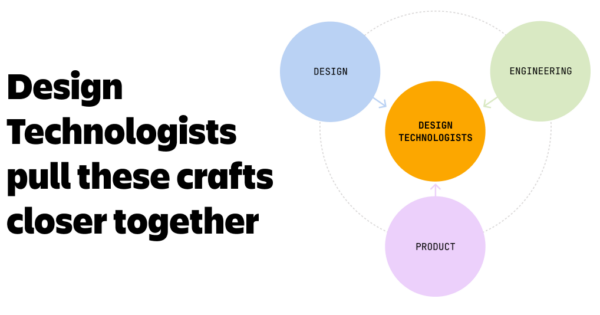
Design Technologists (also known as Creative Technologists or Design Engineers) aren’t a new idea, but their skills are increasingly critical for building scalable frameworks that enable more teams to quickly create interactive, AI-powered prototypes and integrate with tooling. The role sits between design and engineering: DTs need to think like a designer, but code like an engineer. The demand for DTs is not about replacing designers or engineering roles, but rather about bridging the gap between the two functions. They operate at the edge, experimenting with new technologies, malleable UI patterns, and workflows to make unconventional, ambitious concepts safer and faster to explore.
What Design Technologists do
At Atlassian, DTs build real, interactive, data-connected prototypes that teams can touch and feel. Think something close enough to the real thing so that teams can get to “I know this is right” instead of “I think this will work” before it’s expensive to find out otherwise. This allows them to test feasibility and edge cases early.
They also share extensions, scripts, and automation approaches that translate design’s intent into code for the engineering team. They are responsible for guiding tokens and guiding designers and developers as they work. This reduces reworking code and any unexpected surprises at the very end of a project timeline.
To adapt to AI-native ways of working, DTs are champions of integrating AI directly into design-system scaffolding. This enables anyone on the design team to create realistic, on-brand, coded prototypes within minutes. The result is broad enablement of prototyping that can scale easily.
Working a step ahead
Design Technologists accelerate existing processes and make sure the team is working at the edge of what’s possible. Their role includes testing new technologies, exploring malleable UI patterns, and prototyping unconventional ideas that would have been too risky or too slow to explore before. They build the infrastructure, context layers, and systems that other teams can plug into, making it faster and lower-risk for more people across the organization to experiment ambitiously.
AI has turbocharged this. Our Design technologists at Atlassian are driving higher confidence in the feasibility of complex ideas faster and a lot earlier on. As a result we are shifting decisions to be made sooner as stakeholders and leaders can feel the experience that our customers will receive.
The impact we’ve seen since introducing Design Technologists
Inside Atlassian, the impact of DTs on our ways of working has been striking. Our Teamwork Lab of behavioural scientists conducted research to understand what changes we’re seeing. Here’s what stood out:
- We’ve seen 35% month-over-month growth in AI prototyping activity
- 92% of our team of PMs and designers say prototyping significantly improves decision-making
- Over 12,000 AI-powered prototypes are currently running across Atlassian teams
- 42% of the design team report faster delivery speeds, freeing engineers to focus on the hardest problems
But there is another, unexpected benefit of the DT role. When designers and engineers can both react early on to something that feels real, the dynamic between them changes. The teams we spoke with say the DT role changes not just how fast they ship, but how they actually feel about working together.
As AI makes prototyping faster and more accessible, this way of working is becoming available to more teams, not just those with technical roles. The way Engineering, Design and Product teams work together is evolving. This creates a prototyping culture that keeps the user at the centre of designing experiences and raises the bar for everyone.
One key takeaway
If we’ve learned anything at Atlassian from introducing Design Technologists into our workflows, it’s that teams that get to working, testable experiences faster are making better decisions and shipping better products.
So, when you look at your design workflows – the frictions, delays and ideas losing momentum – ask yourself, what is that gap costing you?
Want to go deeper?
We put together a case study document about the Design Technologist role. Learn more about what it is, how it works, and how to think about bringing this kind of practice to your organization.