


Last week, Atlassian hit pause on business-as-usual. 1,400 designers and product managers were invited to participate in AI Builders Week with one goal: stop theorizing about the future of work and start building it. For design, this meant pressure-testing what these tools actually change in our customers’ day-to-day experience. To make this shift possible, 108 presenters and mentors facilitated 31 sessions, providing hands-on expertise and guidance to help everyone build, test, and iterate together.
As our guest speaker, product advisor and AI expert Ravi Mehta, put it during our fireside chat,

“In the past, we’ve built products as an assembly line… Now we’re shifting from an assembly line to more of a jazz band… You can have a guitarist who starts to carry the rhythm. But if you turn off all the other instruments, you’re not going to have the same quality of music. The best products are going to be the result of all of those people doing their best work from their unique perspective and bringing that together into something that feels magical.”
Ravi Mehta
Prototyping at Atlassian has evolved rapidly, with roughly 85% of designers and product managers actively using AI prototyping tools. We’re now moving to the next level: building confidence with production-ready prototyping tools. This isn’t about designers becoming engineers; it’s about getting designers closer to the environments engineers use daily to turn their ideas into experiences our customers can actually use.
Prototyping closer to production code
Part of my role as a Design Technologist at Atlassian is to empower designers to explore the more technical side of software design. My Builders Week session focused on creating a baseline understanding of traditional developer tooling like IDE’s, development environments, and the role that Bitbucket and deploying prototypes can play in collaborating with code. I walked participants through how to setup a remote development environment without downloading a single line of code onto their computers. Together, we learned how to run a dev server and setup Rovo Dev to make code changes and answer questions about Atlassian’s front-end monorepo.
Towards the end of the week, I hosted a build group where makers broke out into small groups to put their learnings into practice. Several groups attempted to setup remote development environments in their respective product areas, often collaborating with a product engineer from their team. One group working on Trello got as far as building out a new feature using Cursor and opening a pull request in Bitbucket!

Hands-on learning
Across seven hands-on build groups, a wide range of topics were covered across prototyping and AI workflows, resulting in 240+ builds across the week:
- Prototype to production – Designers partnered with product managers and engineers to ideate with production code. In most cases, this went beyond demos to actual data-driven prototypes.
- Build and test with customers – Teams used AI prototyping tools to publish concepts and validated them through real-time customer conversations.
- End-to-end agents – Using Rovo Studio and Solution Builder, participants architected agentic workflows across first and third-party tools.
- Dogfooding our platform – Participants extended Jira, Confluence, and JSM directly through App Builder, while others leveled up on embedding evals to measure quality and safety during the build rather than after.
- and more…
Exploring new workflows and processes was a major theme of the week. We saw powerful progressions where teams would start with Figma Make and Replit to explore ideas, then move into Cursor to finish their builds. For many this was a huge unlock.
3 of the 240+ builds our designers created during AI Builders Week:
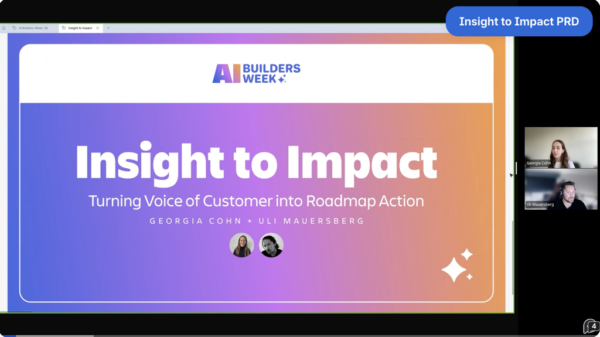
‘Insight to Impact’ converts customer research insights into actionable roadmap items..
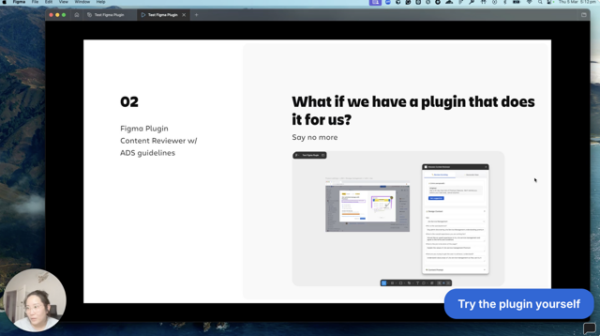
A Figma plugin that streamlines the process of checking content with our content assistant agent.
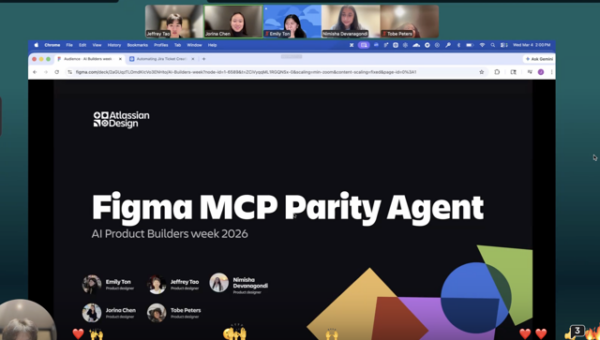
Figma MCP parity agent analyzes designs to create comprehensive documentation in Jira.
The friction of the “floor” and “ceiling”
As Anil Sabharwal (Atlassian Board Director & global product leader) and Charlie Sutton (Atlassian CDO) reminded us during their Builders Week fireside chat, AI is raising both the floor and the ceiling of what’s possible. They emphasized that as capability expands, the differentiator will not be technical fluency alone, but the uniquely human qualities designers bring, including taste, creativity, and sensitivity to context.
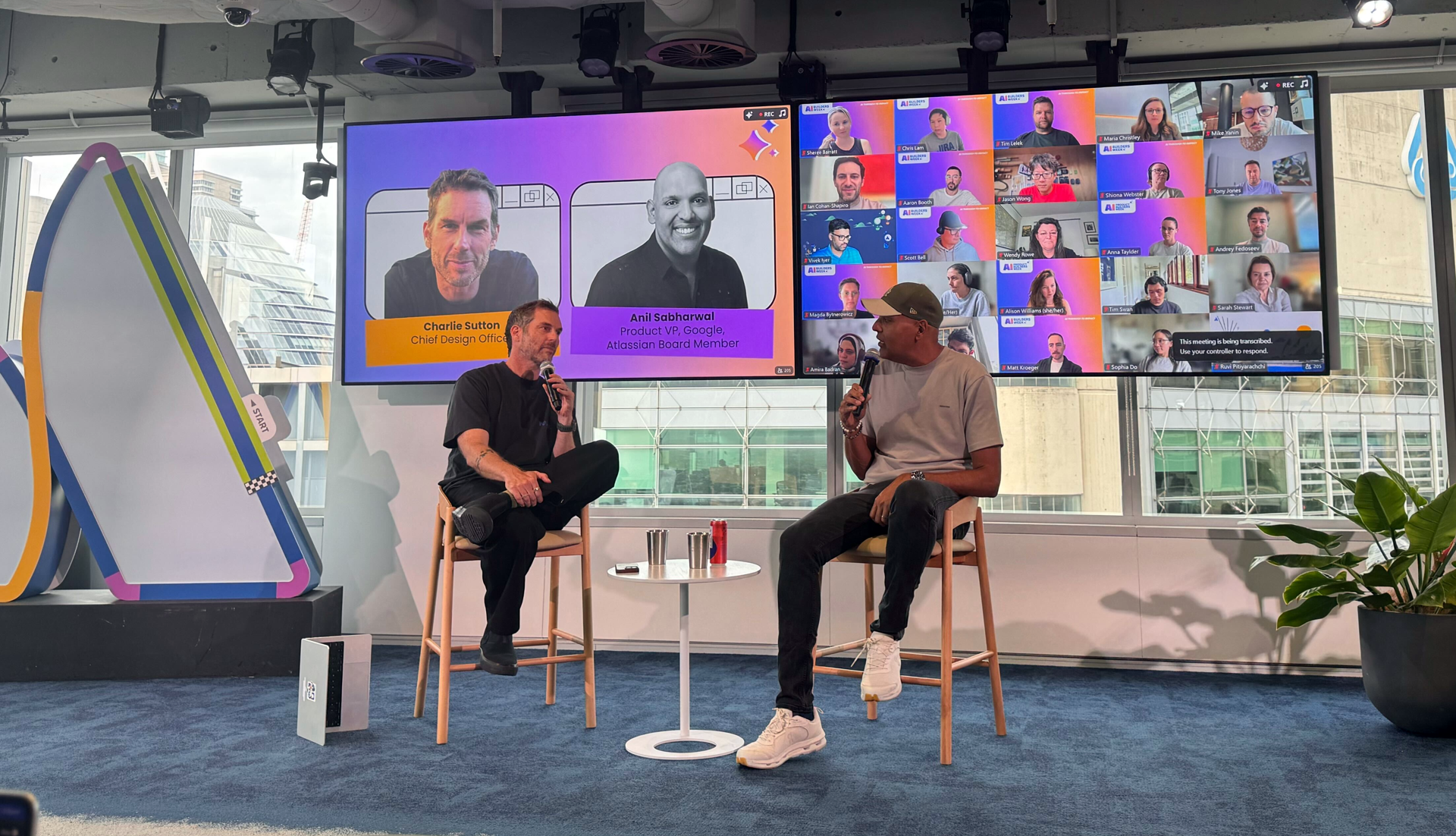
Fireside chat with Anil and Charlie on what it really takes to build AI-powered products people actually love
Moving closer to production code isn’t without its challenges. The process includes everything from opening a PR to the foundational work of getting a development environment to run. But this friction is just as important as the wins. It highlights a critical pain point for both designers and engineers: How do we democratize the process of setting up a development environment? Design Technologists at Atlassian aim to help lead the way in making sure these processes are faster and more intuitive for all makers.
Engineers have been trained to solve the technical hurdles that come along with product development. Designers and product managers have the opportunity to lean into this by leading with curiosity, knowing that encountering errors and hitting walls is a normal part of the software development lifecycle. Lucky for us, this process is getting easier every day with the help of AI like Rovo Dev.
AI Builders Week reflected Atlassian’s evolving design culture, and 96% of participants gave positive ratings. At Atlassian, we are proving that when designers build, the path from a “good idea” to a “great product” becomes shorter, clearer, and much more impactful.
There’s more to explore from our design team — ideas, craft, and the people shaping our products.


